Direct Thermal or Thermal Transfer: A Straight Answer
Choosing between direct thermal and thermal transfer printing comes down to one question, and it is not about the printer. It is about how long the label must remain readable.
The short answer: if the label outlives its usefulness within six months and is in a benign environment (dry and room temperature), use direct thermal and save the ribbon cost. If it needs to survive longer than that, or faces heat, sunlight, abrasion or chemicals, use thermal transfer. There is very little middle ground.
Positive ID Labels supply both, along with the labels and ribbons that run through them. This guide sets out the real difference, so you can specify correctly the first time rather than discovering the problem in year two.
How the Two Methods Actually Work
Both use a thermal printhead. What differs is what the heat acts on.
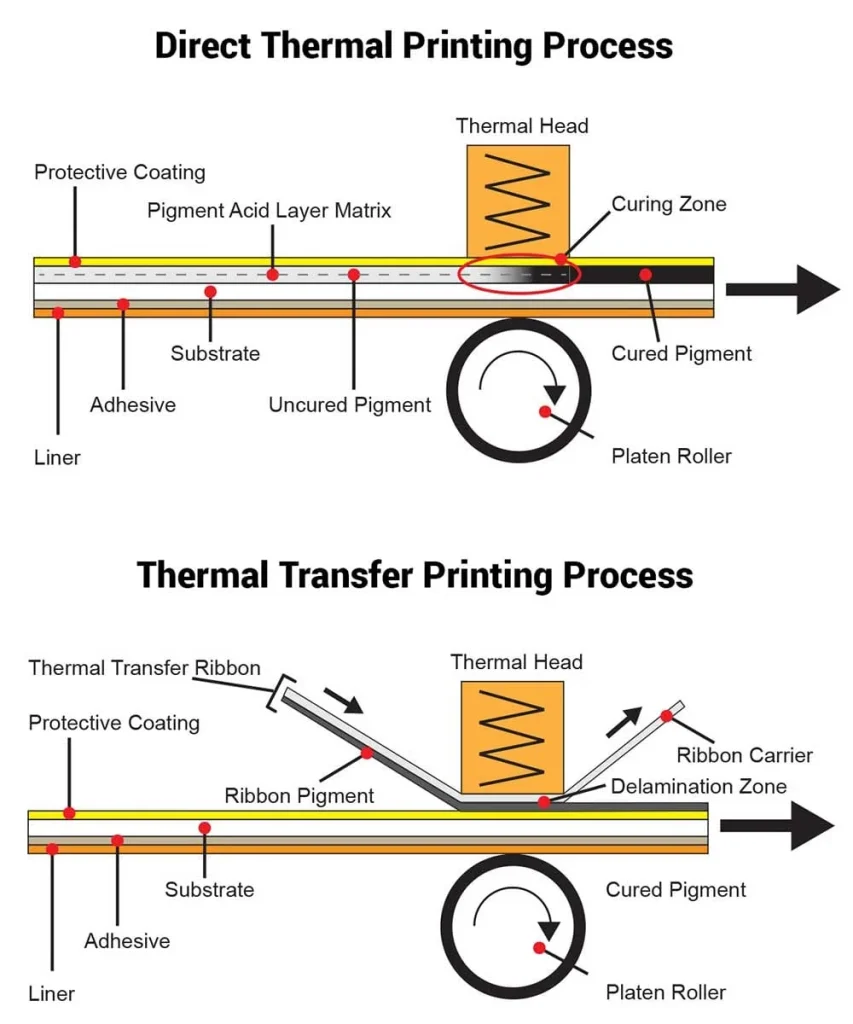
That difference explains everything else. The image is a reaction in the label coating, so anything that triggers that reaction later will darken it. Heat, sunlight and time all do exactly that.
Where Direct Thermal Is the Right Choice
This method of printing using thermal labels suits short-life applications, and there are more of them than people assume.
Fresh food labels, where the product is eaten long before the label degrades. Despatch and courier labels, which are scanned within days. Retail price labels that change weekly. Ticketing, queue systems, weigh scale labels, and internal warehouse work.
The advantages are practical rather than technical. There is no ribbon to buy, store, load, or dispose of. Operators cannot mismatch ribbon to material because there is no ribbon. And the cost per label is lower.
The limitation is honest and well understood: the image typically stays reliable for six to twelve months, then fades. Leave one on a car dashboard for an afternoon, and you will see how perishable it is in a hot environment.
When Direct Thermal Is Not Enough
Thermal transfer labels earn their extra operating cost wherever the label has to last.
Asset and equipment labels that must remain readable for years. Chemical drums, where the label faces solvents and cleaning agents. Outdoor storage and anything exposed to UV. Products with long shelf lives. Anything handled repeatedly, where abrasion would wear a printed surface.
The thermal ribbon choice matters as much as the decision itself:
Putting a wax ribbon on a polypropylene label is one of the more common specification errors. The image will not anchor properly and will rub off, which looks like a printer fault and is not.
The Direct Thermal Mistake That Costs Most
The expensive error runs in one direction: choosing the cheaper method where thermal transfer was needed.
It looks fine on day one. The label prints crisply, the barcode scans, everyone is happy. Eighteen months later the asset label on a piece of equipment is unreadable, the barcode will not scan, and someone has to relabel an entire estate.
The reverse error costs less but is still waste. Paying for thermal transfer durability on a sandwich label that goes in the bin the same day means buying ribbon you did not need on every single label. (The only case where this might not be appropriate is if you are labelling products that are kept warm – above 50oC, the label will degrade and just end up black after a few hours in the warming box.
So the question to ask before specifying is simple: how long does this label need to be readable, and what will it face in that time? Answer that honestly and the choice makes itself.
Can One Printer Do Both Direct Thermal and Transfer?
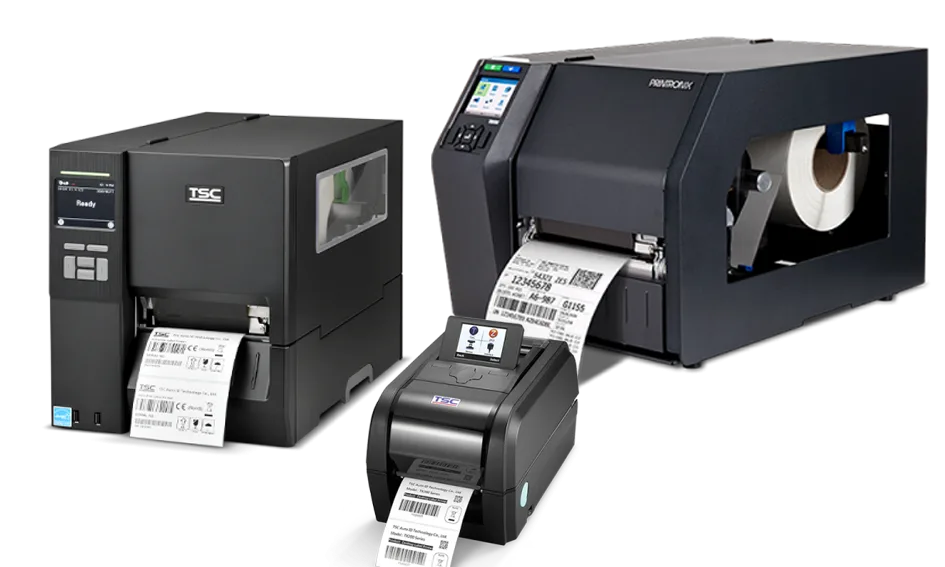
Many thermal transfer printers can also print direct thermal, because the mechanism is the same minus the ribbon. That flexibility is useful if you run both types of work.
A machine built for direct thermal labelling only cannot do the reverse. It has no ribbon carriage. Examples include the TSC DA220 or legacy TSC TDP225 printers, which have no ribbon capacity. A giveaway for your printer will be if it has a “D” in the model code – for example a Zebra GK420d which is a 4 inch wide, 200dpi direct thermal printer.
If your requirements might change, or you print a mix, a thermal transfer capable machine is the safer purchase. It costs a little more and removes a future problem. An example would be a TSC TC200 desktop label printer or MB241T industrial thermal printer – both can handle ribbons and direct thermal label printing. We can supply these with labelling software for you.
Frequently Asked Questions
How long does a direct thermal label last? Typically six to twelve months of reliable legibility under normal indoor conditions. Heat, sunlight and friction all shorten that considerably. If a label must still be readable in two years, choose thermal transfer instead.
Can I use heat-sensitive labels in a freezer? Yes, and cold conditions do not harm the image. The consideration in freezer applications is the adhesive rather than the print method, because standard adhesive will not hold on cold or damp surfaces. You need ‘freezer labels‘ with freezer-grade adhesive specified for the application temperature.
Does thermal transfer print look different? Both methods produce sharp black print. Thermal transfer with a resin ribbon on a synthetic label tends to look denser and holds fine detail slightly better, which matters for small barcodes. For general text, the difference is marginal.
Is the ribbonless method cheaper overall? Per label, yes, because there is no ribbon. Over the life of the application, it depends entirely on whether the label survives. A reprint programme caused by faded labels costs far more than ribbon would have.
What happens if I use the wrong ribbon type? Usually the image does not anchor properly and rubs off under handling. Match the ribbon to the material: wax for paper, resin for synthetics, wax resin for most general work in between.
Can I switch between the two on the same printer? On a thermal transfer capable machine, yes. Remove the ribbon and change the media type setting in the printer or your software. It takes a couple of minutes. Just remember the material has to change too, since direct thermal needs heat-sensitive stock.
Not Sure Which You Need?
Tell us what the label goes on, where it lives, and how long it has to stay readable. Call 01332 864895 and that is usually enough for us to specify the right method, material and ribbon in a single conversation.
We would rather get the specification right than sell you consumables you do not need. If the cheaper option does the job, we will say so.
Call 01332 864895 and ask for the technical team, or send your requirements through the enquiry form. Most orders leave us within five working days.