
Natashas Law
Meeting the Natashas Law rules is a cinch with Positive ID Labelling’s range of labelling software, printers and labels.
Finding labels that survive busy kitchens, print clearly every time, and meet strict legal requirements is harder than you might expect. Since October 2021, UK food businesses selling prepacked items have faced new Natasha’s Law compliance obligations that transformed ingredient labelling practices. Here’s everything you need to know about this essential legislation and how Positive ID Labels can help you meet these requirements efficiently.

What Is Natasha’s Law?
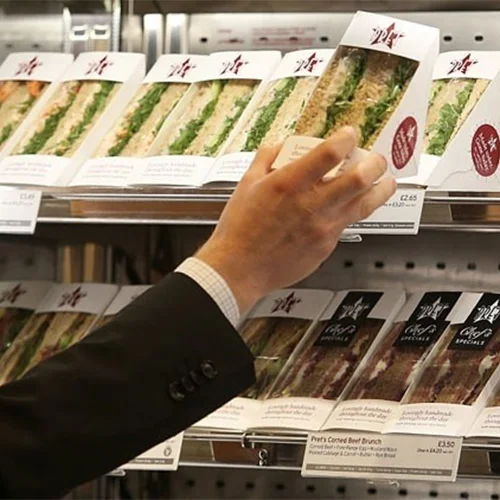
Natasha’s Law is the name given to amendments to the Food Information Regulations that came into force on 1st October 2021 and is an addition of food and sandwich labelling regulations. The legislation requires businesses selling Prepacked for Direct Sale (PPDS) foods to display full ingredient lists with allergens clearly emphasised on every item.
The law takes its name from Natasha Ednan-Laperouse, a fifteen-year-old who tragically died in 2016 after suffering a severe allergic reaction to sesame seeds contained in a Pret a Manger baguette. Natasha knew she was allergic to sesame, but the packaging gave no indication the ingredient was present. Under previous regulations, foods prepared and packed on the same premises where they were sold were exempt from full ingredient labelling.
Following Natasha’s death, her parents Tanya and Nadim campaigned tirelessly for greater transparency. Their efforts resulted in Natasha’s Law being laid before Parliament in September 2019, with a two-year transition period allowing businesses time to prepare.
Why Was Natasha’s Law Introduced?
Approximately two million people in the UK live with diagnosed food allergies. Before the legislation came into effect, businesses selling PPDS foods could provide allergen information verbally or through signage rather than directly on packaging. This created significant risks for consumers who couldn’t always speak to staff before purchasing.
The Food Standards Agency describes Natasha’s Law as an important step towards making the UK the best place in the world for people with food allergies and intolerances. The aim is to restore consumer confidence by ensuring anyone with an allergy can make safe, informed choices without relying on verbal communication.
See our complete Labelling Solutions range.

I had an amazing experience working with Positive ID Labelling, especially Natalie. The labels were absolutely brilliant quality and exceeded my expectations. Natalie was fantastic throughout the whole process. Communication was amazing from start to finish. She was so helpful, guided me through everything, and made the whole experience stress free and enjoyable. She was also genuinely funny and a pleasure to work with, which made everything even better. I’ll definitely be working with Natalie again on future projects and would highly recommend Positive ID Labelling to anyone looking for high-quality labels and excellent customer service.

Fantastic label printing service. Labels to a very high specification. Helen was great at sorting out our requirements, quotes, and order.

We’ve had a great experience working with this supplier, especially with Natalie - she is always very responsive, professional, and friendly. The pricing is highly competitive and the sales service has been excellent from start to finish.If I could offer one suggestion, it would be to improve the account and invoice management process. It would be really helpful if there were a system for clients to easily track their past orders and invoices in one place.Overall, very pleased with the service and look forward to continuing our collaboration.

I inadvertently ordered the incorrect label guns which was quickly sorted by Natalie. She was excellent, customer service at its best! Thank you once again

The 14 Declarable Allergens Under Natasha’s Law
Any compliant food label must emphasise these fourteen allergens whenever they appear in the ingredient list:
- Cereals containing gluten (wheat, rye, barley, oats, spelt, kamut)
- Crustaceans (crabs, prawns, lobster)
- Eggs
- Fish
- Peanuts
- Soybeans
- Milk (including lactose)
- Tree nuts (almonds, hazelnuts, walnuts, cashews, pecans, Brazil nuts, pistachios, macadamia nuts)
- Celery (including celeriac)
- Mustard
- Sesame seeds
- Sulphur dioxide and sulphites (above 10mg/kg)
- Lupin
- Molluscs (mussels, clams, squid, oysters)
Note: Why “May Contain Nuts” is not a suitable catch-all.
Who Does Natasha’s Law Apply To?
The legislation applies to any business that prepares and packages food on the same premises where it is sold, before the customer selects or orders it. This includes:
- Food service establishments such as cafes, sandwich shops, bakeries, delicatessens, and coffee shops selling items wrapped or boxed before purchase.
- Retail outlets including butchers packaging meat pies for display, supermarkets with in-store bakeries, and convenience stores preparing sandwiches on-site.
- Institutional catering covering schools, hospitals, care homes, universities, and workplace canteens serving prepacked meals.
- Mobile vendors operating food trucks, market stalls, or temporary outlets where items are packaged before customers order.
What Counts as PPDS Food?
A food item qualifies as Prepacked for Direct Sale when the food is packaged at the same place it’s sold, packaging is applied before consumers select or order, and packaging encloses food so contents cannot be altered without opening it.
Common examples include sandwiches displayed in chilled cabinets, pastries wrapped in bakery counters, salad pots assembled for grab-and-go, and burgers wrapped under heat lamps. Items made fresh to order are not PPDS and don’t require full ingredient labelling under Natasha’s Law.
What Information Must PPDS Labels Include?
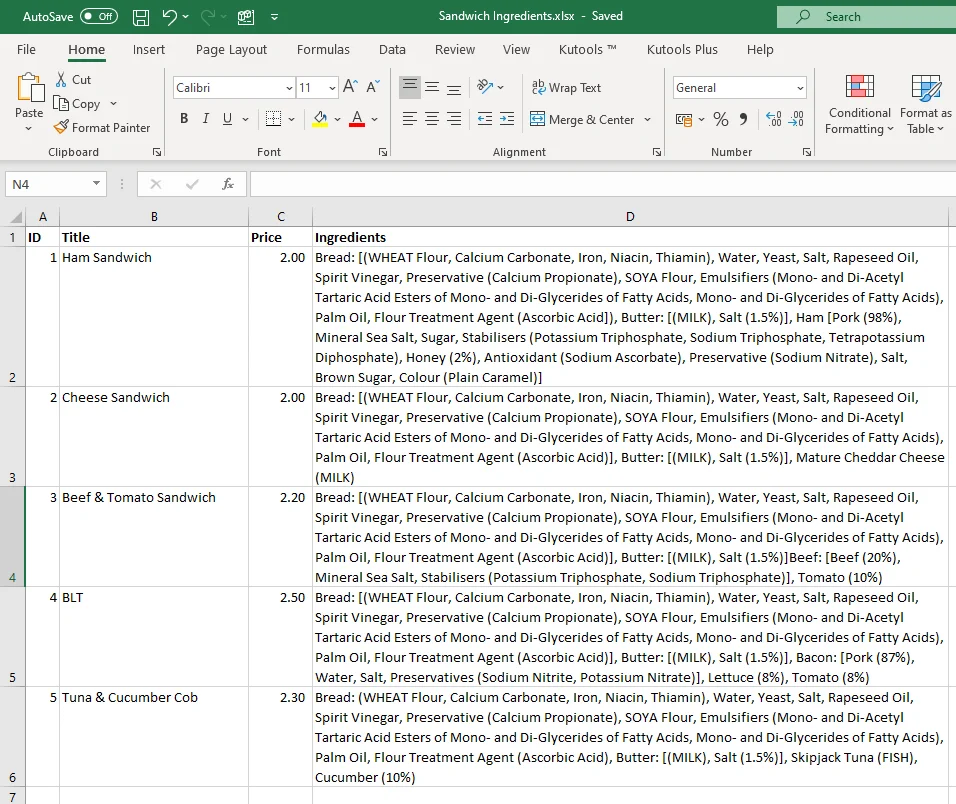
Every PPDS label must display the food name and complete ingredients list. Within that list, all fourteen allergens must be emphasised so they stand out clearly from other ingredients.
How to Emphasise Allergens on Food Labels
The regulations don’t prescribe exactly how allergens must be highlighted, but compliant methods include bold text, CAPITAL LETTERS, underlining, different colours, or contrasting fonts. Include a statement such as “For allergen information, see ingredients in BOLD” to guide customers.
Each allergen must be emphasised every time it appears. If wheat flour appears twice in a recipe, both instances need highlighting.
Additional PPDS Label Requirements
Beyond allergens, labels typically need best before or use-by dates, storage instructions where necessary, QUID percentages where applicable, and clear text with minimum x-height of 1.2mm for legibility.
Penalties for Non-Compliance
Food businesses failing to comply with Natasha’s Law face serious consequences. Trading Standards and Environmental Health Officers can provide advice, serve improvement notices, or prosecute businesses. Beyond legal penalties, non-compliance risks severe reputational damage through social media exposure and loss of customer trust.
Reas our case study on how Positive ID Labels fixed a food labelling audit failure for one of our customers
How Positive ID Labels Helps You Achieve Natasha’s Law Compliance
Meeting these obligations requires more than just printing labels – you need food labelling software to help you achieve it. You need systems managing ingredient data accurately, software formatting allergens correctly, and reliable equipment producing compliant labels every time. Positive ID Labels provides a complete solution combining Nutridata software, professional label printers, quality labels, and intuitive labelling software.
Nutridata: Your Allergen Management Software
Nutridata is web-based software designed specifically to help food producers create compliant labels meeting Natasha’s Law requirements. The software automatically reviews recipes and highlights all fourteen declarable allergens, converting them to UPPERCASE for clear emphasis.
Key features include automatic allergen detection across all recipes, QUID calculations placing ingredients in correct compositional order, nutrition data computation, cost tracking per recipe, and cloud-based storage with hourly backups. Nutridata is provided free to customers purchasing labelling systems and labels from Positive ID Labels – call 01332 864895 to discuss your requirements.
Label Printers for Every Business Size
Whether you’re a small cafe producing fifty labels daily or a wholesale operation printing thousands, our thermal label printers match your requirements. Desktop thermal label printer models offer compact footprints for tight kitchen spaces, while industrial label printers deliver speeds up to 14 inches per second.
Our sandwich labelling starter packs include 4-inch desktop label printers ready for professional PPDS labelling immediately. All systems include free remote installation and training to get you operational quickly.
Label Direct and EnLabel Software
Label Direct labelling software provides the perfect PPDS solution for allergen labelling compliance. Design a single layout, link it to your Nutridata database, and print compliant labels for your entire range from just two files. EnLabel labelling software offers enhanced formatting for complex designs, including bold and highlighted text carried directly from databases – ideal for allergen emphasis in ingredient lists, olong with diagonal or arced text display.
Professional Labels That Perform
Our food-grade labels withstand refrigeration, handle moisture, and maintain legibility throughout shelf life. Direct thermal labels suit short-life chilled products, while thermal transfer options provide durability for items stored longer or exposed to varying temperatures.
Getting Started with Natasha’s Law Compliance
Achieving compliance needn’t be complicated. Start by identifying which products qualify as PPDS. Gather complete ingredient information from suppliers – they’re legally required to provide accurate allergen data. Then implement a labelling system ensuring consistent, accurate output every time.
Call 01332 864895 to discuss your requirements with our friendly team. We’ll guide you to the right solution, whether you’re a single-site cafe or multi-location producer. Free quotes, free samples, and expert advice – hat’s the Positive ID Labels approach.
Frequently Asked Questions About Natasha’s Law
When did Natasha’s Law come into effect?
Natasha’s Law came into effect on 1st October 2021 across England, Wales, Scotland, and Northern Ireland. Businesses had a two-year transition period from September 2019 to prepare for the new requirements.
Does Natasha’s Law apply to made-to-order food?
No. These labelling requirements apply only to food prepacked before customers order or select it. Items prepared fresh after ordering follow different requirements, typically verbal or written communication.
Can I handwrite compliant labels?
While not explicitly prohibited, handwritten labels are prone to errors and legibility problems. Professional printed labels using software like Nutridata ensure accuracy, compliance, and efficiency while protecting customers and your business. Have you really got the time?
What if my supplier changes a recipe?
You must update labels immediately to reflect ingredient changes. Nutridata makes this straightforward – update ingredients in your database and changes cascade through all affected products automatically.
How small can allergen text be?
The lowercase x-height must be at least 1.2mm for standard packaging. Packaging under 80cm ² can use 0.9mm text. Regardless of minimums, allergen text must be clearly legible and noticeably emphasised within the ingredient list.
Do I need specific labels for online orders?
Distance selling follows different rules. Allergen information must be available before purchase and again at delivery. Contact us on 01332 864895 for guidance on distance selling of food requirements.
Ready to achieve full compliance? Call Positive ID Labels on 01332 864895 for a free consultation. With over 20 years of experience in the labelling industry, we understand food compliance inside out – let us make your life easier.