Registered Barcode or Your Own? When You Need To Buy One
A registered barcode is not always necessary, and knowing when you need one saves both money and a great deal of trouble. The answer depends entirely on where the product will be scanned.
The short answer. If the product only ever gets scanned inside your own business, on your own till or stock system, you can use your own numbers. If it goes out into the wild and gets scanned by somebody else’s till, you need a registered barcode number issued by GS1. There is no reliable middle ground, and inventing a number for retail sale creates a problem that can be expensive to unpick later.
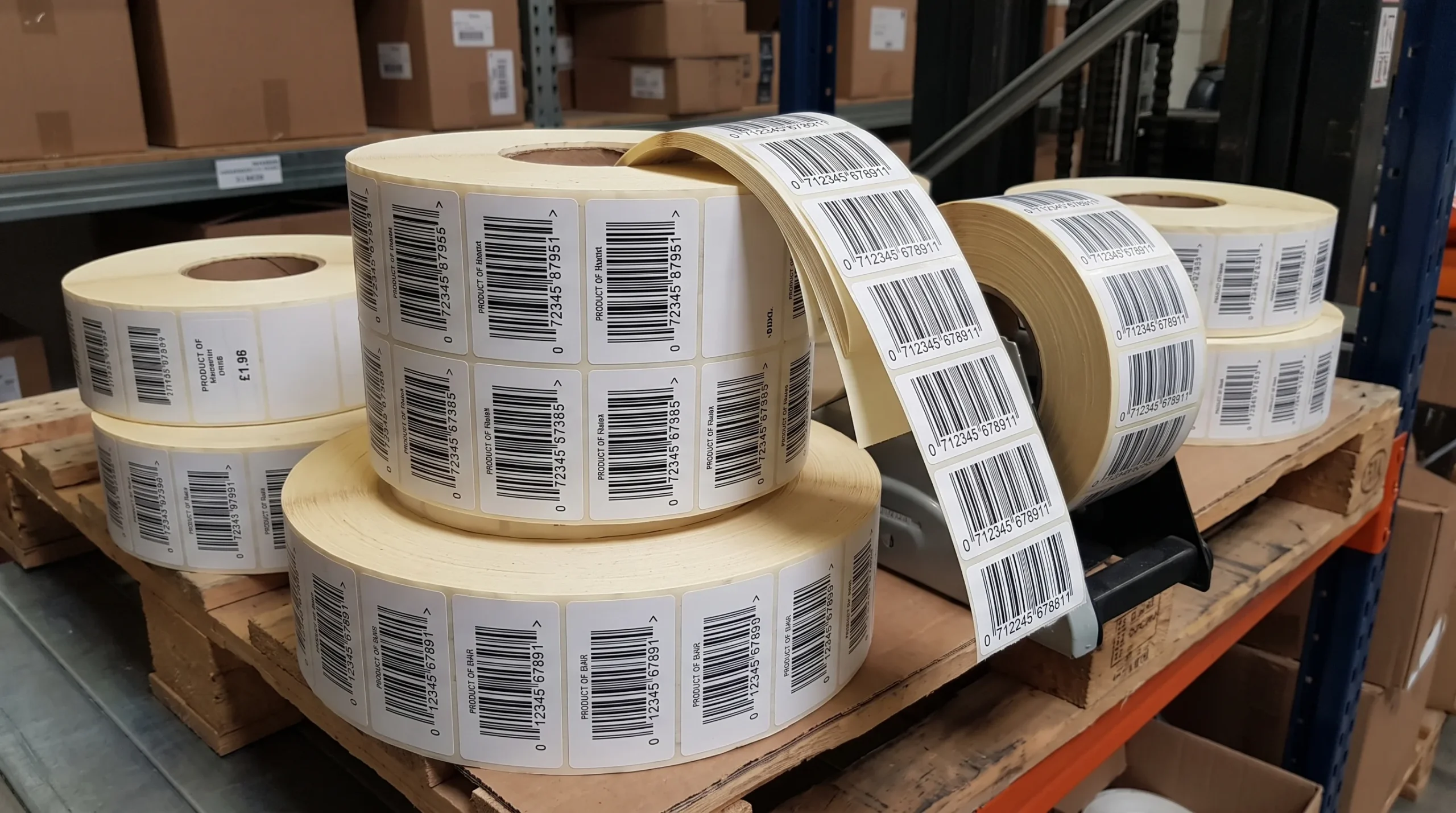
Positive ID Labels print barcode labels for producers, retailers and manufacturers across the UK, whether they are a registered barcode or not. This guide explains when a registered barcode is genuinely required, when it is not, and why a made-up number could be riskier than it looks.
What a Registered Barcode Number Actually Is
A retail barcode label has two parts, and conflating them causes most of the confusion.
Think: A pack of 12 x 4-finger KitKats has a different barcode from a single 4 x 4-finger pack

That is the trap. Nothing physically stops you from inventing a number and printing it. The barcode will scan perfectly. The question is what it scans as, and that is determined by whose number you have used.
When You Do Not Need a Registered Barcode
There is a legitimate, standards-based route for internal use, and most people do not know it exists.
GS1 reserves specific number ranges for what it calls Restricted Circulation Numbers. These are deliberately not globally unique, because they are never meant to leave the business that assigned them. Two ranges matter in practice:
- Numbers beginning 02 are used within a single company, and are the usual choice for variable weight items produced and packed in store, and do not need to be a registered barcode.
- Numbers beginning 20 to 29 are reserved for restricted circulation within a geographic region and should be a registered barcode only
If you run a deli counter, weigh and wrap your own products, or track stock through your own EPOS system, this is what you should be using. It is free, it is standards-compliant, and crucially it will never collide with a real product’s GTIN, because those ranges are permanently set aside for exactly this purpose.
Supermarkets have used this for decades. The barcode on a piece of loose fruit or a freshly wrapped tray of meat is almost always a restricted circulation number carrying weight or price data.
Why Inventing a Number Is Not a Registered Barcode
Choosing a plausible-looking thirteen-digit number is a different matter entirely, and this is where businesses get into trouble.
There are only so many valid EAN-13 barcode numbers, and a very large proportion of them are already allocated to real products. If you invent one, there is a genuine chance it already belongs to somebody else’s item.
The consequences are practical rather than theoretical. A retailer scans your product and their system rings up a chocolate bar. Their stock control decrements the wrong line. Their sales data is now wrong, and so is yours. If the collision is with a fast-moving grocery product, it will be noticed quickly and you will be asked to relabel everything.
It also matters that pack variants are separate products in this system. A single four-finger chocolate bar and a multipack of the same bar carry different GTINs, as do the same soft drink in a can and in a bottle. Each variation you sell needs its own number, and using one number across several sizes causes the same downstream mess as a collision.
Where a Registered Barcode Becomes Necessary
What About Registered Barcodes Sold Cheaply Online?
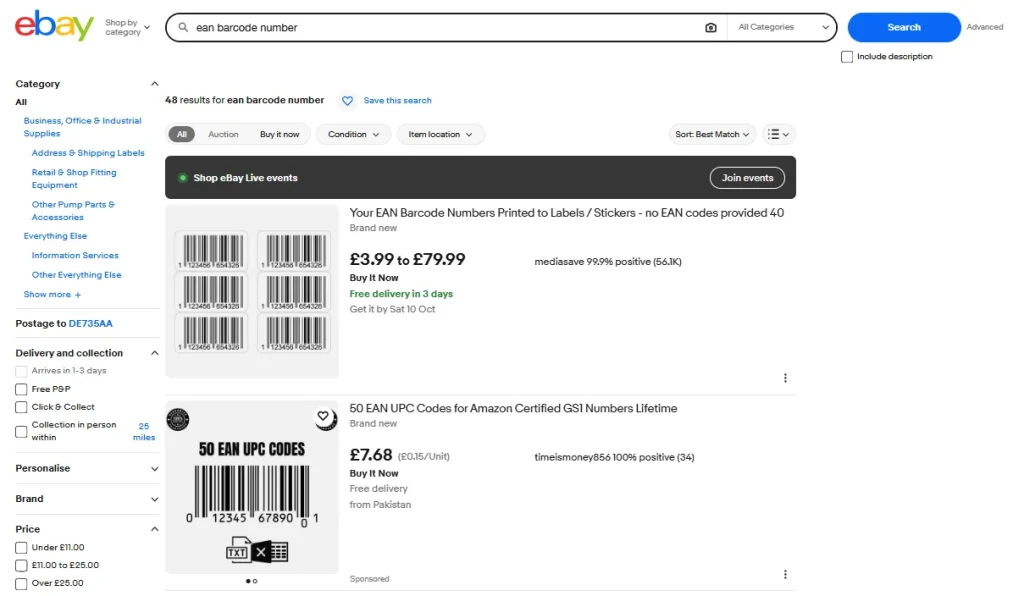
You will find numbers for sale on marketplaces and standalone websites, often for a few pounds with no annual fee. These are usually numbers issued to companies decades ago and subsequently resold.
The sellers argue that these are legally transferable, and there is a long-running dispute behind that claim. GS1’s position is that resellers are not authorised to issue GS1 numbers.
For a business trying to decide, the legal argument is beside the point. What matters is whether the number will pass a retailer’s verification check, and a resold number traces back to whoever originally licensed it rather than to you. If you are selling only through your own website or a local farm shop, it may never be tested. If you have any intention of supplying a supermarket or a major marketplace, licensing properly from the start is considerably cheaper than relabelling later.
A Practical Way To Decide If You Need One
Ask one question: will anybody outside my business ever scan this?
If no, use a restricted circulation number from the 02 range and keep a record of what you have assigned. It costs nothing.
If yes, or if there is any realistic chance the answer becomes yes, license from GS1 before your packaging is printed. Retrofitting a registered barcode into finished artwork is a small job. Reprinting ten thousand labels is not. Call 01332 864895 if you want to talk it through first.
Frequently Asked Questions
Can I use my own barcode numbers on my EPOS system? Yes. If products are only scanned on your own tills and stock system, you can assign your own numbers freely. Using the 02 range is the sensible approach, because those numbers are reserved for internal use and cannot collide with a real product. They can also be used for internal variable data barcode labels, so long as they do not escape the confines of your business.
What happens if my made-up barcode matches a real product? The scanner will read it as that product. The retailer’s stock and sales data become inaccurate, and the error usually surfaces at the till. In practice, you will be asked to withdraw and relabel the affected stock.
Do I need a separate registered barcode for each size of my product? Yes. A GTIN identifies a specific product in a specific size and pack configuration. Different weights, different pack counts and multipacks all need their own numbers.
Can I use one barcode for a product I sell in two different flavours? No. Flavour variants are distinct products and need distinct numbers. Sharing one number across variants makes it impossible for a retailer to tell which is selling.
Are barcodes bought on eBay or Amazon legitimate? They will scan, but they trace back to the company that was originally issued them rather than to you. Marketplaces and retailers that verify against the GS1 database may reject them. For local or direct sales it may never be tested, but it is a poor foundation if you plan to grow.
Do I need a GS1 number to put a QR code on my packaging? Not for a QR code that simply points at your own website. GS1 identifiers become relevant when the code needs to carry product identification that other organisations in a supply chain can interpret consistently.
Getting the Barcode Printed Once You Have the Number
Once you know which route you need, the printing is the straightforward part. Send us the number and your artwork, and we will generate the barcode at the correct size, print it properly and check that it scans before it leaves us.
If you are not sure which route applies to you, tell us where the product will be sold. That usually settles it in a couple of minutes, and we would far rather have that conversation before your labels are printed than afterwards.
Call 01332 864895 or send your requirements through the enquiry form. We quote a fixed price over the phone, not an estimate, and most orders leave us within five working days.