
Barcode Labels That Scan First Time, Every Time
Printed and despatched fast, built for the environment they live in, and specified properly before you order. 80% of orders leave us within five working days.
Trustpilot 4.9 / 116ISO 9001Fixed-price quote
Labels Are Production-Critical. We Treat Them That Way.
Quality that scans. Crisp, high-contrast print from barcodes generated at the printer’s native resolution, so codes read first time on the line and at the till, not on the third try.
Speed you can plan around. 80% of orders despatched within five working days, with easy reordering and progress updates if you want them.
Service that solves the problem. Tell us the surface, the environment and the printer. We specify the label that works before you commit to a run.
Value with no surprises. We quote a fixed price over the phone. The price we quote is the price you pay.
Most of our customers don’t want to think about labels. They want them to turn up, scan, and never stop the line. That is the job we take on.
A Barcode That Won’t Scan Is Worse Than No Barcode At All
A poor label costs you twice. Once when the scan fails, and again when the line stops or the despatch is held. Smudged print, the wrong material for a cold store, an adhesive that lifts in the damp: small specification mistakes with a big operational cost. And running out mid-run is its own kind of stoppage.
Barcode Labels, Specified, Printed and Supported
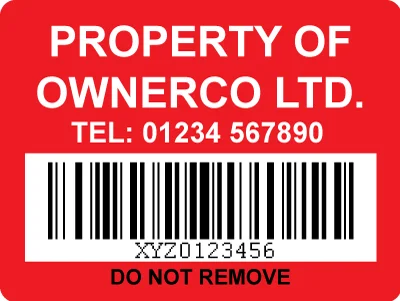
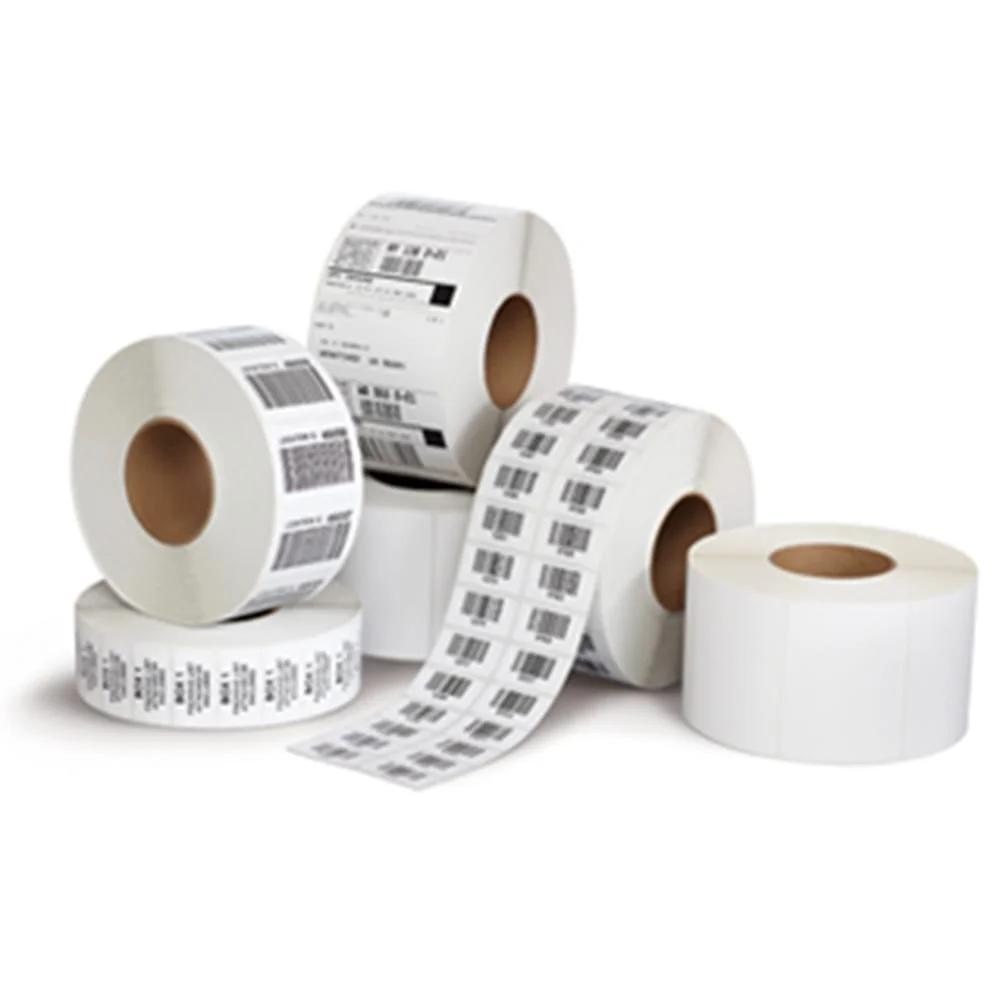
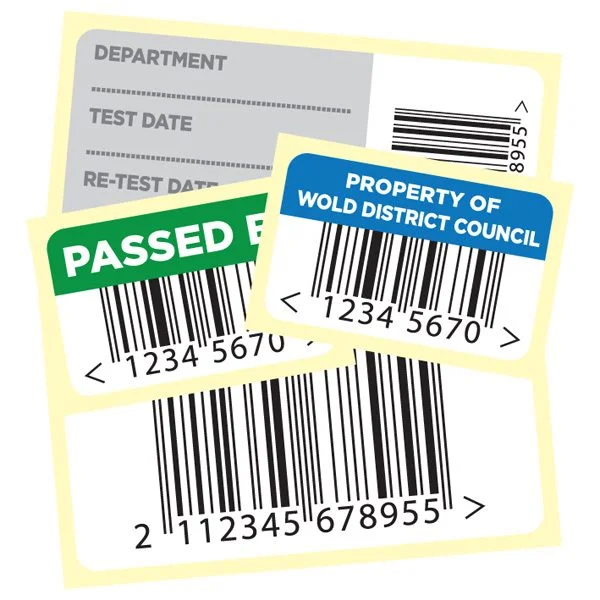
We supply barcode labels two ways. We print finished variable data labels, with sequential codes, batch numbers or serial data, ready to apply. Or we supply blank label stock matched to your thermal printer, so you print on demand using your own data.
Either way, we specify the material and adhesive for where the label has to survive. Semi-gloss paper for indoor use, polypropylene for damp, chilled or abrasive conditions, freezer-grade adhesive for the cold chain. The common symbologies are all supported, including Code 128, Code 39, DataMatrix and QR, generated at native print resolution so they read reliably first time. Supplied on 25, 38, 44 or 76mm cores to suit your applicator or printer.
Trustpilot 4.9 / 116Fixed-price quote80% despatched in five working daysISO 9001Reorder reminders before you run out
Labels are production-critical, so we set a reorder reminder when your job completes, based on how fast you use them, and get in touch before you run out rather than after. You focus on production. We make sure you never run short.
Choosing the Right Barcode Label
Three decisions, and we will talk you through all of them. Material, by environment: paper for indoor and short life, polypropylene for moisture, chemicals and abrasion, thermal stock where you print on demand. Adhesive, by temperature and surface: standard permanent for most jobs, freezer-grade for the cold chain. Print method, by volume and data: variable-data digital when we print for you, or on-demand thermal when you print in-house.
From warehouse barcode labels and asset tags to retail and NHS barcode labels, the right combination keeps your scans reliable and your costs sensible.
1D and 2D Barcode Labels Explained
When 1D Barcode Labels Are the Right Choice
Linear codes hold a modest amount of data and scan fast. They suit retail pricing, logistics, simple asset identification and most warehouse work. If you are choosing a format, our guides on 1D barcode formats and barcode label symbology walk through the options.
When 2D Barcode Labels Make Sense
DataMatrix and QR codes pack far more data into a smaller area and can be read from a phone. They suit part marking, tight spaces, and any application needing more than a reference number, including brands preparing ahead of GS1 Sunrise for 2027.
Barcode Verification and Where We Stand On It
There is a difference between a barcode that looks right and one that has been measured. Verification grades a printed code against an agreed standard, scoring it from A down to F on things a human eye cannot judge: edge contrast, modulation, decodability and the clear quiet zone either side of the symbol. It is a specialist service carried out with calibrated equipment.
It matters because some retailers and regulated supply chains reject on grade rather than on whether the code happens to scan on the day. A grade C barcode reads fine on a new scanner in good light and can fail on a worn handheld in a cold store. We generate every barcode in software at the printer’s native resolution, so the bars land on whole printhead dots instead of being rounded to fit. That is what produces clean, consistent edges and a code that reads first time. We do not hold verification equipment and we do not issue ISO grading reports, so if your customer specifies a certified minimum grade you will need an independent verification service for that.
What Makes a Barcode Fail in the Field
Most scan failures trace back to a handful of causes, and almost all of them are specification problems rather than printing faults. Too little contrast between bars and background. Design elements creeping into the quiet zone. A code shrunk below its minimum size to fit the space. A worn printhead leaving a white line down the bars. Direct thermal stock used where the label needed to last two years.
Each one is cheap to avoid at the quote stage and expensive to discover after a delivery is rejected. Send us the artwork and the environment and we will tell you which of these you are at risk of.
Sequential Numbering and Variable Data
Plenty of barcode work is not one code repeated. It is thousands of unique ones. Sequential numbering, batch codes, serial numbers, asset references and date-coded identifiers are all routine for us, printed in a single pass with the code and the human-readable digits matched.
You can send us a data file, or just the rule: a start number, an increment, a prefix, a check digit if the format needs one. We can skip ranges you have already used, reserve blocks for later, and pick up where the last run finished so numbers never repeat across orders.
Printing Variable Barcodes In-House
If the data is not known until the moment of packing, the answer is usually blank stock and your own printer rather than pre-printed labels. We supply thermal label stock matched to your printer and core size, or an overprintable varnish on pre-printed artwork so a code can be added at the line. Which suits depends on where in your process the number becomes known, and that is the first question we will ask.
For the full picture, our guide to variable data labels covers what can be varied and what it costs.
Frequently Asked Questions
Will the barcodes still scan after handling or cold storage?
Yes, when the label is specified correctly. We match the material, print resolution and finish to your environment so the code keeps its contrast and reads first time, even after the cold chain or rough handling.
Can I make my own barcode labels?
Yes. We supply blank thermal stock matched to your printer and core size, so you can print on demand. Tell us the printer make and your label size and we will specify the right roll.
Can you print sequential or variable data?
We can. Sequential numbering, batch codes and serial data are all standard. Send us the data, or the rules for generating it, and we will print finished labels ready to apply.
Which barcode formats do you support?
All the common symbologies, including Code 128, Code 39, EAN and UPC for retail, and DataMatrix and QR for 2D. If you are tied to a particular format by a customer or system, tell us and we will match it.
Can I order custom shapes and sizes?
Yes. Cores come in 25, 38, 44 and 76mm, and we hold over 1,000 dies in stock, so there is a good chance your shape is already tooled. If not, short-run laser cutting avoids any tooling charge.
I need labels quickly. Can you help?
Often, yes. 80% of orders leave us within five working days and many sooner. If you have a deadline, call 01332 864895 and we will tell you honestly what we can do.
Do you verify barcodes to an ISO grade?
No. We do not hold verification equipment and we do not issue grading reports. What we do is generate the barcode in software at the printer’s native resolution, so the bar widths are accurate by construction rather than by eye. If your customer requires a certified grade, an independent verification service is what you need.
Can you continue a number sequence from a previous order?
Yes. Tell us where the last run finished and we will pick up from the next number. We can also skip ranges you have allocated elsewhere, so numbers never collide across orders.
Related Products and Guides
Explore related ranges: variable data labels, tote bin labels, medical labels and sequential numbellers. You can also browse our full range of Industrial Safety Labels.
Go deeper on barcodes. Start with our barcode labelling guides index, or go straight to the detail: barcode symbologies, 2D codes such as QR and Data Matrix, and retail barcodes for products sold through a till.
Getting set up. If you do not have a number yet, read how to get a barcode for retail. If you plan to print in house, our guide to choosing a barcode label printer covers resolution, duty cycle and printhead care. For the 2027 changes, see the GS1 Sunrise implementation guide.
Send us your spec, or call 01332 864895 for a fixed-price quote. No obligation, an honest turnaround, and a barcode label that scans first time.