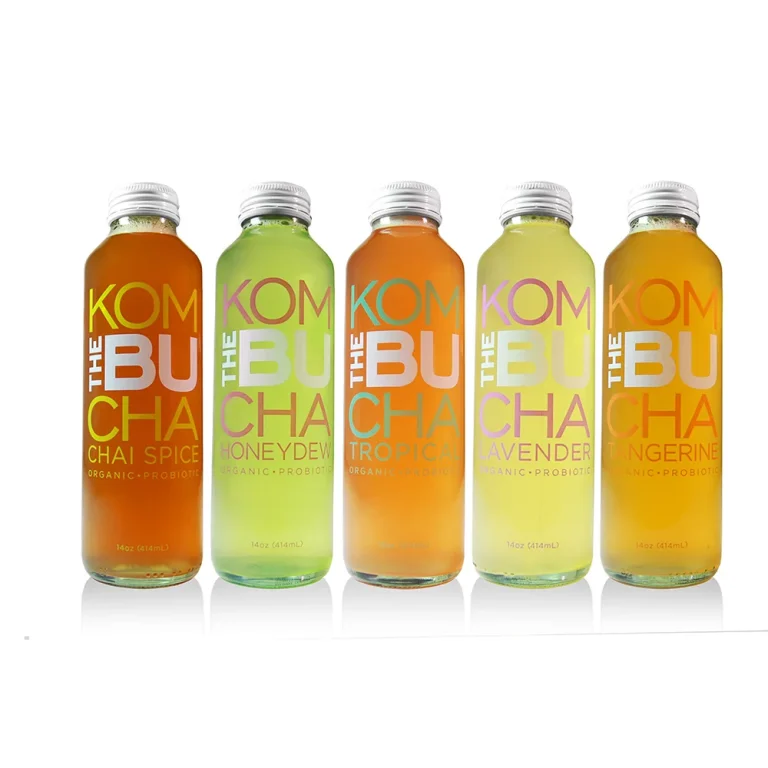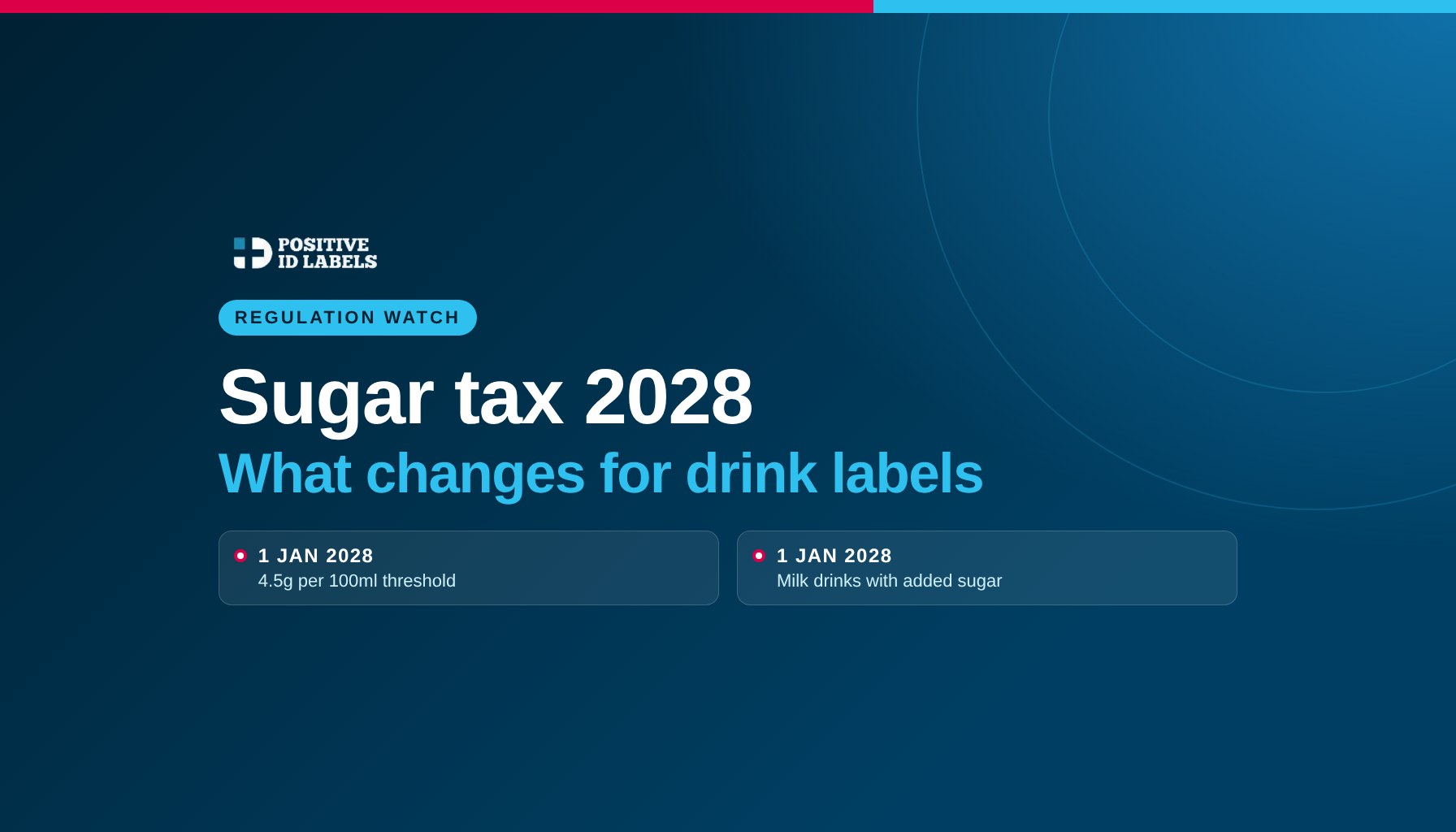
Does your drink contain 4.6g of sugar per 100ml? Today it’s under the sugar tax. From 1 January 2028 it won’t be. The same date brings sweetened milkshakes, flavoured milks and oat drinks into the levy for the first time.
At Positive ID Labels, we print labels for soft drinks makers, dairies and coffee brands. The tax doesn’t change what a label must say. But most brands respond by changing the recipe, and a new recipe means a new nutrition panel. This guide explains the changes and how to plan your label runs.
This guide is part of Regulation Watch, where we track UK and EU label rule changes. You’ll find every key date, free printable checklists and topic email alerts in one place.
What Changes With the Sugar Tax in 2028
The sugar tax is formally called the Soft Drinks Industry Levy. HMRC’s policy paper confirms three changes:
- A lower threshold. The levy will start at 4.5g of sugar per 100ml instead of 5g.
- Milk-based drinks join. Pre-packaged milk drinks with added sugar lose their exemption. The tax counts total sugars minus the natural lactose from milk.
- Milk substitutes join. Sweetened oat, soya and nut drinks lose their exemption too, based on their total sugar content.
Plain milk, and single-ingredient plant drinks without added sugar, stay out. So do drinks served in open cups in cafes. Producers making less than a million litres a year remain exempt.
Who the Levy Now Reaches
HMRC estimates around 100 UK producers and importers aren’t registered for the levy yet, including milk drink makers. Typical products include:
- supermarket milkshakes and flavoured milks
- sweetened yoghurt drinks
- ready-to-drink coffees
- soft drinks that sit just above 4.5g per 100ml
The changes still need Parliament’s approval. HMRC says they will be in the Finance Bill 2026 and take effect from 1 January 2028.
Why the Sugar Tax Ends Up on Your Label
The levy is a tax on producers, not a labelling rule. Nothing on the pack has to say “sugar tax”. So why should label buyers care?
Because when the levy arrived in 2018, brands cut sugar to avoid it. The government says the levy removed almost half the sugar from shop-bought soft drinks. Expect the same again, and every reformulated drink needs its label updated.
A typical reformulation touches several parts of the pack at once:
- The nutrition declaration, because sugars and energy per 100ml go down.
- The ingredients list, if a sweetener, fibre or flavouring is added or the order of ingredients shifts.
- Front-of-pack colour coding, if you use the voluntary traffic light scheme.
- Marketing copy, such as “no added sugar” or “now with less sugar” flashes.
Some brands will choose to pay the levy and keep the recipe. That’s a commercial decision, and their labels may not change at all.
Sugar Tax Reformulation and Your Nutrition Panel
The nutrition declaration shows energy, fat, carbohydrate, sugars, protein and salt per 100ml. Change the recipe and those figures change. Swap sugar for a sweetener and your ingredients list changes too.
Sugar Tax Claims to Handle With Care
Many brands will want to say “reduced sugar” or “lower sugar”. These are nutrition claims with their own conditions. Our nutrition and health claims guide explains how they work.
A Sugar Tax Timeline for Your Label Runs
Work back from 1 January 2028. Lock the new recipe and get the nutrition figures. Update the artwork, then switch label runs. Keep order quantities tight in late 2027 so old stock doesn’t outlive the recipe.
If you sell through retailers, ask when they want new-recipe stock on shelf. Some will want it before January, so your label switch may come earlier than the tax date. Talking to your printer early helps you avoid a rush in the run-up to Christmas 2027.
Changing a range of drinks next year? Call 01332 864895 for a fixed-price quote on the new runs.
Line It Up With Your Other 2027 Changes
Drinks brands have a busy 2027. If your bottles and cans are in the UK deposit return scheme, existing products need new barcodes registered by 9 July 2027, ahead of launch on 1 October 2027. If you can, make one artwork change rather than two.
Free download: Sugar tax 2028 checklist (PDF). The actions from this guide as a printable checklist, with the key dates and sources.
How Positive ID Labels Can Help
- Labels for chilled drinks. White and clear polypropylene handle fridges and condensation, and resist water by nature. Clear PP gives a “no-label look” on bottles.
- Protection in the crate. Gloss or matt laminate on our Xeikon and Screen presses adds scuff protection for bottles that travel.
- Short runs while recipes settle. Our Screen UV inkjet prints at 600dpi, and digital runs make it practical to switch labels when a new recipe lands.
- Lower unit costs at volume. For long runs on our flexo presses, we hold over 1,000 dies, so tooling is often free.
We quote a price, not an estimate, and that’s the price you pay. Call 01332 864895 or send your artwork through our enquiry form.
Frequently Asked Questions
When do the sugar tax changes start?
The new 4.5g threshold and the milk drink changes take effect from 1 January 2028, subject to the Finance Bill. A separate change to producer registration applies from 1 April 2027.
Are milkshakes included in the sugar tax?
Yes, from 1 January 2028, if they are pre-packaged and contain added sugar at or above the threshold. Lactose from milk is not counted.
Are oat and soya drinks covered?
Sweetened milk substitute drinks are covered from 1 January 2028. Single-ingredient plant drinks with no added sugar stay exempt.
Do I have to print anything about the levy on my label?
No. The levy doesn’t add any label wording. Labels change because recipes change, which alters the nutrition declaration and ingredients list.
Does the levy apply to coffee shop drinks?
No. Drinks served in open cups, like a latte or milkshake made in a cafe, stay outside the levy.
Are small producers affected?
Producers making less than a million litres of liable drinks a year remain exempt. Importers and packagers should check their position with HMRC.
Can I say “reduced sugar” after reformulating?
Possibly, but nutrition claims have strict conditions. Check them before you print, or ask your trading standards service.
Which label material suits chilled milk drinks?
Polypropylene copes well with fridges and condensation. If bottles are labelled cold or wet, ask us about adhesives suited to the conditions on your line.
Sources
- HMRC, Changes to the Soft Drinks Industry Levy (updated 28 October 2026): https://www.gov.uk/government/publications/changes-to-the-soft-drinks-industry-levy
- HMRC, Soft Drink Industry Levy changes, policy paper: https://www.gov.uk/government/publications/changes-to-the-soft-drinks-industry-levy/soft-drink-industry-levy-changes
- HMRC, Strengthening the Soft Drinks Industry Levy, consultation outcome: https://www.gov.uk/government/consultations/strengthening-the-soft-drinks-industry-levy
Last checked: 24 November 2026. General information, not tax or legal advice.
Before you print
This post explains the rules as we understood them when it was last edited. It is general information, not legal advice, and we don’t check label content for compliance. The business selling the product is responsible for what its label says. For advice on your product, contact HMRC or your accountant about the levy, and your local Trading Standards about your label.
Last edited:
Read our full disclaimer | See the latest rule changes | Get a fixed-price quote or call 01332 864895
Regulation Watch
Get Regulation Watch by email
Plain-English updates when a labelling rule changes for your products, with dates and what to do about your label stock. Pick the topics that matter to you.
- Only the topics you pick
- Key dates and what to do
- Unsubscribe any time