Deli Labelling: How To Keep Fresh Food Accurate And Traceable
Deli labelling of food is crucial. A deli counter moves fast. Freshly sliced meats, prepared salads, hand-cut cheeses, and hot food all need to be labelled accurately before they reach the customer. The pressure of service makes it tempting to cut corners.
But deli labelling is not an area where shortcuts pay off. Inaccurate allergen information is a serious safety risk. Poor date marking creates food waste and hygiene problems. Good counter labelling practice protects customers, protects the business, and makes the counter run more smoothly, not less.
At Positive ID Labels, we supply these labelling solutions for independent delis, farm shops, and food service operations. Call us on 01332 864895 for advice.
What Deli Labels Must Include
UK food labelling requirements for loose food sold at a deli counter differ from those for pre-packaged products, but they are no less important.
- Product name: Clearly identifies what the customer is buying. No ambiguity.
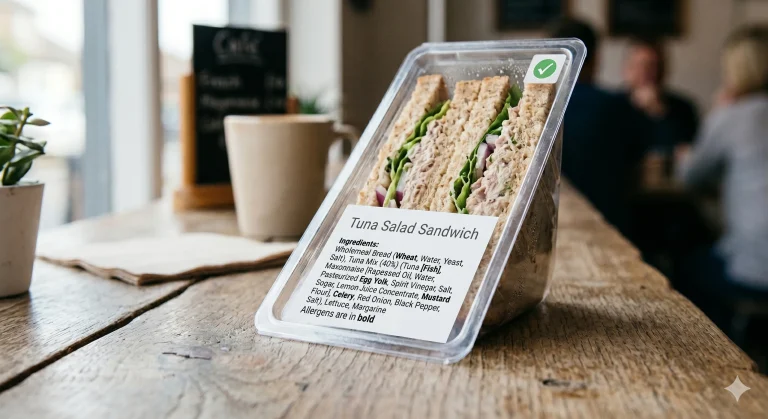
- Allergen information: The 14 major allergens must be declared where present. For loose foods sold from a deli counter, allergen information can be provided verbally, on a menu or information sheet, or on the label. Many deli operators include allergen information directly on the label for clarity and traceability.
- Price per weight or unit: Required under the Price Marking Order 2004 where food is sold by weight.
- Use-by or best-before date: Fresh deli products have short shelf lives. Accurate date marking is essential for safety and stock management.
- Weight or quantity: Where food is sold by weight, the net weight of the packaged portion must appear on the label.
- Origin information: Required for certain product categories including meat, fish, and honey where the country of origin is specified.
Deli Labelling Systems: Matching The Tool To The Operation
On-Demand Deli Labelling For Counter Service
How Thermal Printers Support Accurate Deli Labelling
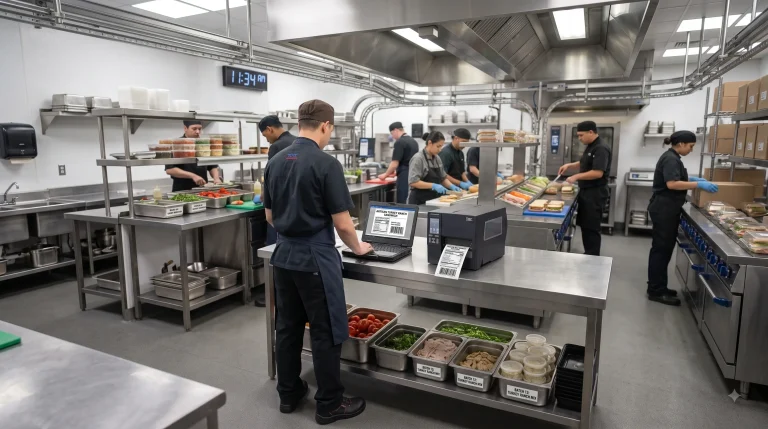
The easiest to use and most reliable labelling setups use a thermal printer connected to a product database. Staff select the product, enter the weight if required, and the deli label prints with correct allergen, date, and pricing information automatically.
This approach is significantly safer than handwritten labels or manually configuring a standalone printer. It removes the opportunity for transcription errors under service pressure. Allergen information prints correctly every time because it is drawn from a verified product record, not entered fresh for each label.
Integrating Scales With Deli Labelling Systems
For weight-based products, connecting scales to the process system eliminates a separate manual step. The customer receives a label that accurately reflects the weight of their portion, the price per kilogram, and the calculated price. This is standard practice in larger deli operations and increasingly common in independent delis where the volume of labelling justifies the investment.
Adhesive Choice For Deli Labelling
Deli environments present specific adhesive challenges that are worth understanding before specifying labels.
Wet and chilled surfaces are the norm in a deli. Products come out of chillers, are handled with cold or wet gloves, and sit in cold display cabinets. Standard permanent adhesive applied to a wet surface may not bond reliably.
Wet Pack adhesive is the specialist solution for this environment. It bonds to wet, cool, or freshly washed surfaces, exactly the conditions found in a deli preparation area. This adhesive type is unusual and not available from all label suppliers. Positive ID Labels can supply it.
For products that move from the counter to a chilled display case, an acrylic freezer adhesive rated for low temperatures provides reliable performance. Labels will not lift or curl under refrigerated storage conditions.
Traceability In Deli Labelling
Beyond the consumer-facing label, deli operations with a genuine commitment to traceability often label at the batch level as well as the product level. This allows any food safety incident to be traced back to a specific delivery, preparation batch, or date. Good deli labelling practice treats traceability as an operational asset, not a regulatory burden.
Frequently Asked Questions About Deli Labelling
Do We Need To Label Every Item At A Deli Counter?
Loose food sold from a deli counter can have allergen information communicated verbally or via a separate information sheet. However, if the food is packaged at the counter before being handed to the customer, it becomes prepacked-for-direct-sale and the requirements of Natasha’s Law apply. Consult current guidance for your specific circumstances.
How Do We Handle Deli Labelling When Recipes Change?
In a database-driven counter labelling system, update the product record and all subsequent labels reflect the change. Handwritten or manually updated labels create the risk of outdated information being applied after a recipe change. The database approach is safer and more efficient.
What Is The Shelf Life For Fresh Deli Labels?
Labels themselves last as long as the substrate and adhesive allow. For most deli applications, the product shelf life is significantly shorter than the label life. The concern is keeping date information accurate, not label durability.
Can Deli Labels Include Barcodes?
Yes. Barcodes can be incorporated into deli labels for integration with EPOS systems or stock management software. Weight-encoded barcodes, such as those used in supermarket deli counters, require compatible scanning equipment at the till.
Do You Supply Labels Compatible With Our Existing Deli Printer?
In most cases, yes. Call us on 01332 864895 with your printer make and model and we will confirm compatible label stock, core sizes, and formats. If you need a complete food labelling system, let us know and we can supply the full labelling system for you.
Improve Your Deli Labelling Today
Positive ID Labels supplies deli counter labelling solutions, from label stock and rolls to complete on-demand printing systems, for food businesses of all sizes.
Call us on 01332 864895 or use our contact form to tell us about your deli operation and current labelling challenges. We will recommend the right approach and provide a fixed price quote.