Label Adhesives Explained: Why Labels Peel
A label that looks perfect on the line but lifts at the corners by morning is one of the most common problems we’re asked to fix. Usually the print and material are fine. The label adhesive is wrong for the job.
At Positive ID Labels, adhesive is one of the first things we ask about when we quote, because it decides whether a label stays put. This guide explains why labels peel, the six adhesives we use and how to choose the right one for your packaging.
Why Do Labels and Stickers Peel Off Packaging?
Adhesive is a soft, slightly liquid layer that grips by flowing into the tiny bumps on a surface. Anything that stops that flow, or breaks the grip later, makes a label or sticker peel. These are the causes we see most.
The Six Types of Label Adhesive We Use
Every adhesive trades off grip, temperature range and how cleanly it comes off. Here are the six we supply.
| Adhesive | Apply at | Works in | Best for |
|---|---|---|---|
| Permanent | 10°C to 40°C | 10°C to 40°C | Most everyday packaging |
| Removable | 10°C to 40°C | 10°C to 40°C | Promotions, price labels, reusable items |
| Acrylic freezer | Down to -10°C | -30°C to +50°C | Chilled and frozen food |
| Hotmelt deep freeze | Down to 0°C | -40°C to +60°C | Commercial freezers, high-grab jobs |
| Wet pack | 10°C to 90°C | 1°C to 90°C | Wet or warm food packs |
| Tyre | 10°C to 40°C | 1°C to 40°C | Tyres and curved rubber |
Everyday Label Adhesive: Permanent and Removable
Our permanent adhesive is water-based and odourless. It’s the right choice for most dry, clean, room-temperature packaging. Removable adhesive uses the same base but is designed to peel away cleanly without residue.
Neither is built for the cold. For fridge or freezer products, move up to a cold-grade adhesive.
Cold-Chain Adhesives: Acrylic Freezer and Hotmelt
Acrylic freezer adhesive can be applied as low as -10°C and holds from -30°C to +50°C, which covers most chilled and frozen food. For commercial deep freeze and rough handling, hotmelt grips harder and holds down to -40°C. Our freezer adhesive guide compares the two in detail, and our freezer labels page shows the materials we pair them with.
Specialist Grip: Wet Pack and Tyre
Wet pack adhesive sticks to damp and warm surfaces, from 10°C right up to 90°C. Tyre adhesive is an extreme-grab grade for tyres and curved rubber, where standard adhesives slide off.
Why Wet Pack Label Adhesive Matters for Food Producers
Most label suppliers can’t offer an adhesive that holds on a wet tray of fresh meat or a hot-filled pot. That’s why wet pack is our first suggestion for butchers labels and hot-fill lines. Like hotmelt and tyre adhesive, it isn’t for direct food contact.
How to Choose the Right Adhesive
Start with where the label goes on, then where it lives afterwards.
Four Questions to Answer First
Matching the Adhesive to the Label Material
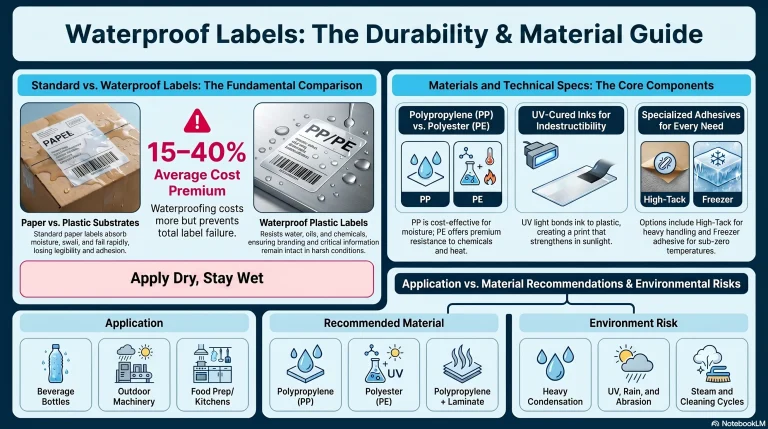
Adhesive and face material work as a pair. Polypropylene shrugs off moisture and suits chilled or wet packs, while paper suits dry, room-temperature ones. The right adhesive under the wrong material still fails.
Label Adhesive Testing Tips
For a new pack or unusual surface, test before a full run. Apply a few labels in real conditions, leave them a day, then check the edges. It’s the cheapest way to avoid a reprint.

I had an amazing experience working with Positive ID Labelling, especially Natalie. The labels were absolutely brilliant quality and exceeded my expectations. Natalie was fantastic throughout the whole process. Communication was amazing from start to finish. She was so helpful, guided me through everything, and made the whole experience stress free and enjoyable. She was also genuinely funny and a pleasure to work with, which made everything even better. I’ll definitely be working with Natalie again on future projects and would highly recommend Positive ID Labelling to anyone looking for high-quality labels and excellent customer service.

Fantastic label printing service. Labels to a very high specification. Helen was great at sorting out our requirements, quotes, and order.

We’ve had a great experience working with this supplier, especially with Natalie - she is always very responsive, professional, and friendly. The pricing is highly competitive and the sales service has been excellent from start to finish.If I could offer one suggestion, it would be to improve the account and invoice management process. It would be really helpful if there were a system for clients to easily track their past orders and invoices in one place.Overall, very pleased with the service and look forward to continuing our collaboration.

Natalie and Positive ID labelling were amazing. I have some really beautiful egg box labels that were exactly what I asked for. Brilliant communication and undertanding from everyone i dealt with. Pricing was good and I will not look any further for all my labelling needs. Thank you again!

Frequently Asked Questions
Why do stickers peel off plastic tubs?
Many plastic tubs have smooth, low-energy surfaces that standard adhesive can’t grip well, especially if the tub is cold or damp. A higher-grab adhesive, applied above 10°C with firm pressure, usually solves it. Test on your actual tub first.
Is adhesive safe for food packaging?
Our permanent, removable and acrylic freezer adhesives are water-based. Hotmelt, wet pack and tyre adhesives are VOC-based, so they’re for the label back only and must not touch food directly. Tell us how the label is used and we’ll specify a suitable grade.
Can I use removable labels in the freezer?
No. Removable adhesive is designed for 10°C to 40°C, so it loses its grip in the cold. For chilled or frozen products, choose acrylic freezer or hotmelt adhesive instead.
Will a label stick to a wet or warm pack?
Standard adhesive won’t, because it needs a dry surface. Wet pack adhesive is made for damp surfaces up to 90°C, which is why butchers and hot-fill producers use it.
Peeling labels cost you time, reprints and shelf appeal. Call 01332 864895 or use our enquiry form, tell us where your labels need to stick, and we’ll specify an adhesive that stays put. The price we quote is the price you pay.