What Makes A Medicine Label Clear, Accurate, And Compliant?
A medicine label carries legal responsibility. Every piece of information – product name, dosage, batch number, expiry date, storage instructions, is governed by regulations designed to prevent medication errors. A label that’s illegible, inaccurate, or incomplete puts patients at risk and creates regulatory liability.
This guide explains what makes a medicine label clear, accurate, and compliant in healthcare and pharmaceutical environments.
Key Information Medicine Labels Must Display
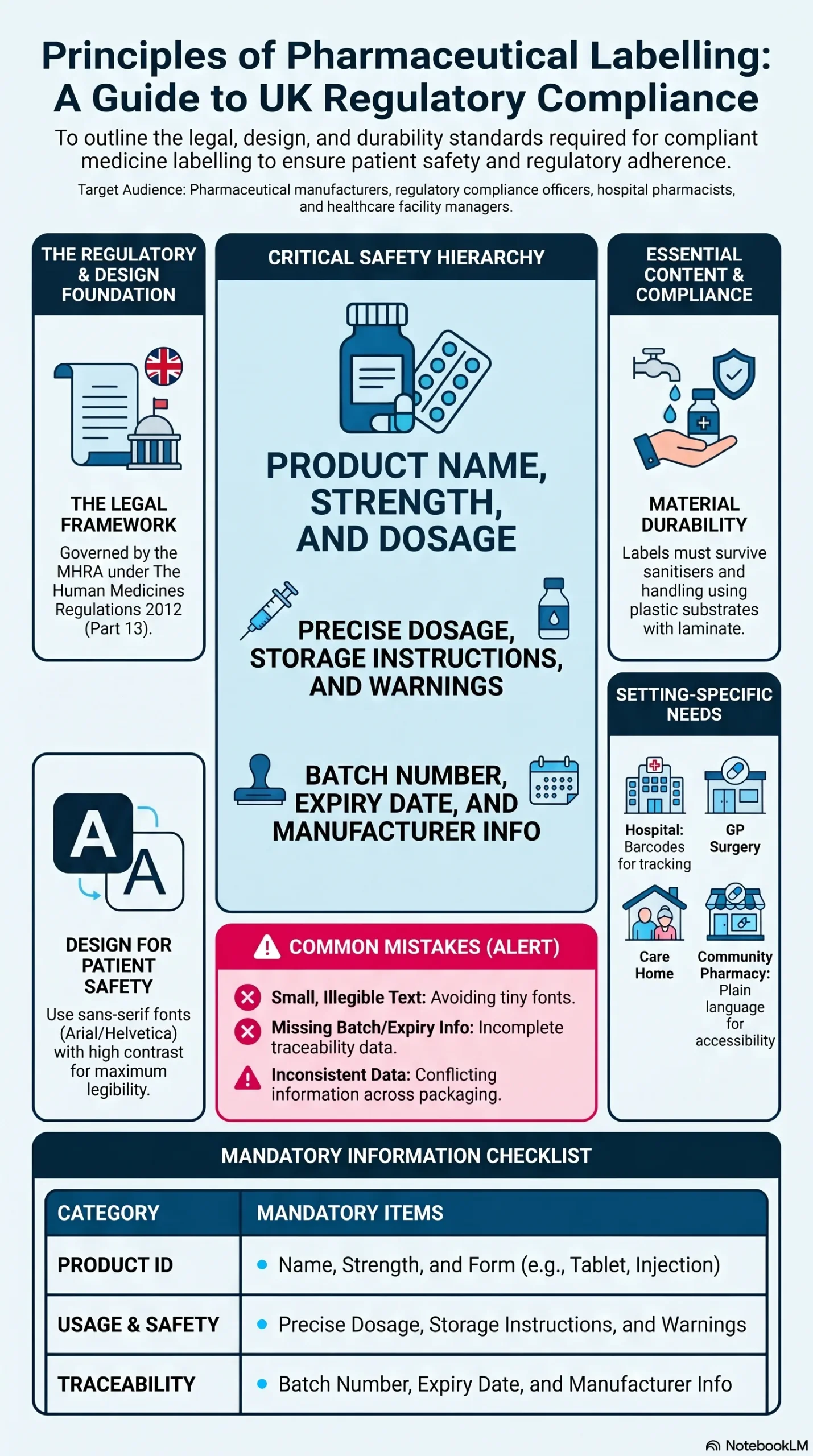
Product identification: The medicine name, strength, and form (tablet, liquid, injection). Clarity is critical because wrong identification leads to wrong medication administration.
Dosage information: Strength per unit, recommended dose, frequency, route of administration. Must be precise and unmissable. Dosage errors are serious medication errors.
Batch number: — Unique identifier linking each package to manufacturing records. Essential for recall traceability if safety issues are identified.
Expiry date: Use-by date after which medication efficacy cannot be guaranteed. Usually printed as month/year. Non-negotiable for patient safety and regulatory compliance.
Storage instructions: Temperature range, light protection, humidity control, specific warnings. Many medicines degrade under incorrect storage conditions.
Manufacturer information: Name and address of the marketing authorisation holder, plus the marketing authorisation number. Enables traceability and allows contact with the manufacturer if questions arise.
Warnings and contraindications: If applicable: interactions, allergies, pregnancy warnings, handling precautions. Must be prominently displayed.
Batch-specific information: Where relevant: lot number and manufacturing date for traceability and quality assurance.
Legibility And Durability Standards
Text size The Human Medicines Regulations 2012 require all label information to be easily legible, comprehensible, and indelible. No minimum point sizes are prescribed in the legislation, the legal test is whether a healthcare professional or patient can reliably read the label.
In practice, this means making text as large as label space allows, with critical information (name, strength, dosage) given clear visual prominence over supporting details.
Contrast: Good contrast between text and background supports the legibility standard. Black or dark text on a white or light background is standard practice in pharmaceutical labelling and supports reliable reading under clinical lighting conditions.
Font: Sans-serif typefaces such as Arial or Helvetica are widely recommended in pharmaceutical labelling guidance for clarity and readability. This is recommended practice rather than a regulatory requirement.
Layout: Organised hierarchy. Critical information (product name, strength, dosage) prominent. Supporting information grouped logically. Professional appearance reinforces credibility.
Material durability: Labels must survive handling, storage, and use. Healthcare environments involve hand sanitiser, glove contact, and transport in bags and pockets. Labels must remain legible and adhered throughout the product’s shelf life. If you’re unsure which material suits your application, call 01332 864895 — we’ll help you choose the right substrate and adhesive for your environment.
Compliance Requirements For Different Settings
Hospital pharmacy — Highest standards. Every package tracked. Hospital pharmacy systems typically use NHS barcode standards for internal inventory and patient safety purposes, though the legal requirement for serialised barcodes under the EU Falsified Medicines Directive no longer applies in Great Britain since January 2025. Individual NHS trusts may require barcodes as part of their own stock management systems.
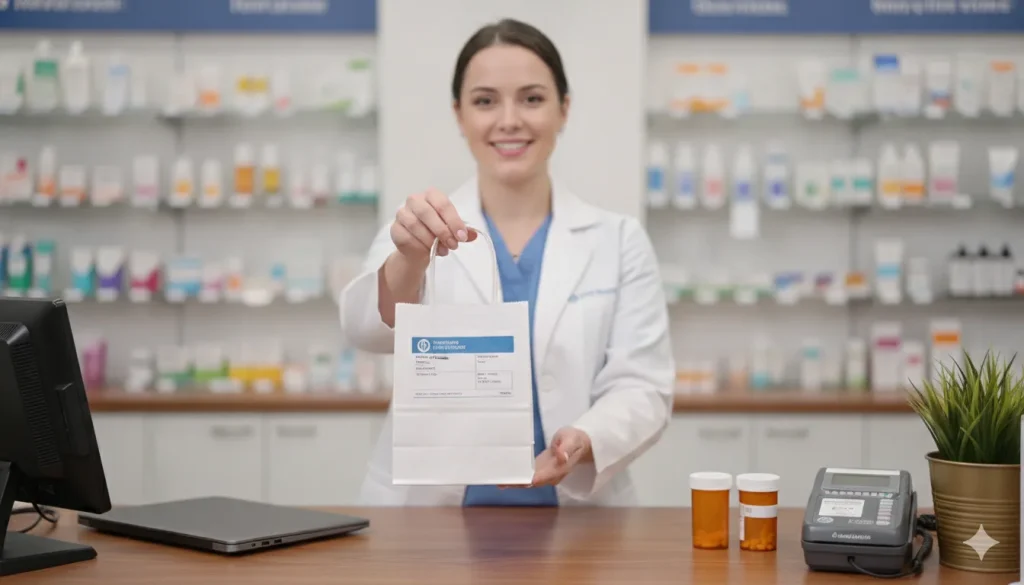
GP surgery — Dispensed medicines must display clear patient instructions in plain language. Compliance labels document prescriber, dispenser, patient name, and administration instructions.
Care homes — Large-volume medicine administration. Labels support multiple-patient environments where medication errors carry serious consequences.
Community pharmacy — Patient-facing labels require plain language instructions in addition to technical information. Accessibility and clarity are essential.
Common Compliance Mistakes
Printing labels too small for reliable reading. Inconsistent information between label, packaging, and documentation. Missing batch or expiry information. Unclear storage instructions. Illegible printing that degrades with time.
FAQ: Medicine Label Compliance Questions
Q: What regulatory body governs medicine labels in the UK? A: The MHRA (Medicines and Healthcare products Regulatory Agency) governs medicine labelling under The Human Medicines Regulations 2012, Part 13. Pharmacies follow additional standards under pharmacy legislation.
Q: Can I use colour on medicine labels? A: Yes, as a supplement to text. Using colour to differentiate warnings or highlight critical information is accepted practice. Colour alone is never sufficient — text is always required.
Q: Do I need barcodes on all medicine labels? A: Not as a universal legal requirement in Great Britain. Hospital trusts and healthcare systems commonly use barcodes for internal tracking, but the EU Falsified Medicines Directive barcode requirement no longer applies in GB since January 2025.
Q: How small can text be on a medicine label? A: The Human Medicines Regulations 2012 require all label text to be easily legible, comprehensible, and indelible — but no minimum point size is prescribed. The legal test is practical readability. Use the largest font size the label space allows, give critical information (name, strength, dosage) the most visual prominence, and avoid overcrowding. If a label is too small to carry all required information legibly, the Regulations permit a reduced information set on immediate packaging with full information on outer packaging.
Q: What material is best for medicine labels? A: Plastic substrates (polyester or polypropylene) with a laminate provide excellent durability for healthcare environments. They resist moisture, handling, and the sanitisers common in clinical settings.
Q: Do I need to display storage temperature as a range? A: Specific storage precautions are required under Schedule 24 of The Human Medicines Regulations 2012. Standard phrases such as “Store below 25°C” or “Refrigerate between 2°C and 8°C” are common practice and leave no room for ambiguity.
Designing Medicine Labels That Support Safety
Medicine labels are safety tools, not marketing materials. Clear, accurate, durable labels reduce medication errors, support traceability, and protect patients.
At Positive ID Labels, we design and print medicine labels that meet healthcare compliance requirements. We understand the legal standards governing pharmaceutical labelling and can help you produce labels that are legible, durable, and accurate.
Need medicine labels designed to comply with healthcare standards? Call us on 01332 864895. Describe your medicines, your setting, and your compliance requirements. We’ll ensure your labels support patient safety and regulatory compliance.
A clear, accurate medical label is the difference between safe medication administration and a serious error.