How Long Do Thermal Labels Last – And What Affects Their Durability?
Thermal labels are everywhere – warehouses, retail, logistics, and food production. But understanding how long they remain legible in real-world conditions determines whether your barcode scanning works flawlessly or fails mid-distribution. Thermal printing labels have two types with very different lifespans, and the difference matters.
Direct Thermal vs Thermal Transfer: How Long Do Thermal Labels Last?
Direct thermal labels apply heat directly to the heat-sensitive dye on the label material. When the printhead heats the dye, it changes colour. No ribbon required – simpler and cheaper.
Lifespan: 6 months to 2 years, depending on the environment. In warm conditions (above 25°C) or direct sunlight, expect 3-6 months. In cool, dark storage, it can be 1-2 years.
Thermal transfer labels use a thermal ribbon to transfer wax or resin ink onto label material. The ink bonds with the material permanently.
Lifespan: 1-5 years or longer. Polyester thermal transfer labels in normal conditions last for years. The difference is dramatic.
Bottom line: Direct thermal fades quickly in warm, light, or damp conditions. Thermal transfer survives harsh environments. Choose thermal transfer for anything lasting beyond 6 months.

Environmental Factors That Degrade Thermal Printing Labels
Heat Exposure
Direct thermal dye reactivates at temperatures above 30°C, causing gradual fading or browning. A warm warehouse (35°C+) degrades labels in weeks. Labels near heaters or sun-exposed surfaces deteriorate fastest.
Thermal transfer resists heat better – normal warehouse temperatures (up to 30°C) don’t significantly affect durability. Extreme heat (above 60°C) can degrade ink, but typical conditions are fine.
Sunlight And UV Light
Direct thermal labels fade noticeably in direct sunlight within days. UV accelerates dye degradation.
Thermal transfer, especially polyester, has better UV resistance. It’s still not ideal for prolonged outdoor exposure, but far superior to direct thermal.
Moisture And Humidity
Moisture causes direct thermal dye to discolour or reactivate, creating dark marks or patterns. Condensation ruins labels quickly.
Thermal transfer labels on plastic materials like polypropylene material is water-resistant. On paper material, moisture causes some degradation, but not as severe as direct thermal.
Chemical Exposure
Contact with oils, solvents, or cleaning chemicals causes direct thermal dye to fail or fade. Handled with oily hands? Direct thermal becomes unreadable.
Thermal transfer on polypropylene resists chemical contact excellently. Resin ribbons (required on plastic labels) provide even better chemical durability than wax or wax resin counterparts.
Thermal Printing Labels: How To Choose The Right Specification
Use direct thermal for: Short-term labelling (less than 6 months), internal shipping labels, temporary inventory tracking, and climate-controlled environments.
Use thermal transfer for: Medium-to-long-term labelling (6 months to 5+ years), harsh environments, chemical or moisture exposure, logistics, food production, and asset tracking.
Application-specific durability:
Retail shelf labels: Thermal transfer on paper, 3-12 month lifespan
Warehouse and logistics: Thermal transfer on polyester, 6-24 months (high-handling environments)
Food production/chilled storage: Thermal transfer on polypropylene with freezer adhesive, years of durability in cold
Asset tracking: Thermal transfer on polyester, 2-5+ years for asset lifespan.
Impact On Barcode Scanning And Traceability
A barcode that fades in two months means scanning failures before the label’s job is done. For logistics labels crossing multiple shipment legs, barcode clarity must be maintained throughout.
Choose thermal transfer if barcodes need to be scanned repeatedly over months. Direct thermal is fine for single-event scanning (price gun labels), but unreliable for multi-stage distribution.
Common Mistakes And Durability Issues
Paper labels in damp environments: Condensation causes edge-lifting and text fading. Use polyester if moisture is a factor.
Labels applied to contaminated surfaces: Oil, dust, or moisture prevents the adhesive from bonding. Clean surfaces before applying.
Cheap adhesive in rough-handling environments: Labels peel from vibration or abuse. Use high-tack permanent adhesive for handling-intensive applications.
Direct thermal in warm conditions: Labels fade faster than expected. If the environment is above 25°C, use thermal transfer.
Assuming all thermal transfer is the same: Wax ribbon vs resin, polyester vs paper, specifications vary. Match ribbon and material to your environment.
FAQ: Thermal Label Durability Questions Answered
Q: How much longer does thermal transfer last than direct thermal? A: In cool, dark conditions, the difference is small. In warm, humid, or outdoor conditions, thermal transfer can last 5-10 times longer.
Q: Are thermal transfer labels truly waterproof? A: Polyester thermal transfer with resin ribbon is water-resistant and maintains barcode readability when wet. Paper thermal transfer is not waterproof.
Q: Do I need freezer-rated adhesive for thermal labels in freezers? A: Yes. Standard adhesives fail in freezer conditions. Freezer-rated adhesive maintains bond strength down to-18°C or lower.
Q: Can I use direct thermal labels in a freezer? A: Not recommended. Cold doesn’t degrade direct thermal dye as fast, but freezer adhesives often fail. Thermal transfer with freezer adhesive is far superior.
Q: Why does my thermal transfer label sometimes print dark or light? A: Printer temperature miscalibration. Too hot = dark, underpowered = light. Have your technician check the calibration if quality is inconsistent.
Q: What’s the minimum barcode size for reliable scanning? A: Minimum width is typically 5mm (quiet zone). Slightly larger barcodes maintain scannability longer as labels age and print quality degrades.
Q: Can thermal labels be printed in colour? A: Direct thermal and standard thermal transfer print monochrome (black). For colour, use digital printing (colour inkjet or toner-based).
Q: How do I test whether my label choice will last long enough? A: Print a test label on your intended material with your intended ribbon (if transfer). Place one in normal storage, one in an accelerated aging environment (warm, light, humidity). Check scannability weekly.
Q: Do direct thermal labels contain BPA? A: Most paper manufacturers have abandoned using BPA in their products due to health and environmental concerns. Positive ID Labelling only use non-BPA suppliers for their direct thermal label stock.
Choosing Thermal Printing Labels For Your Application
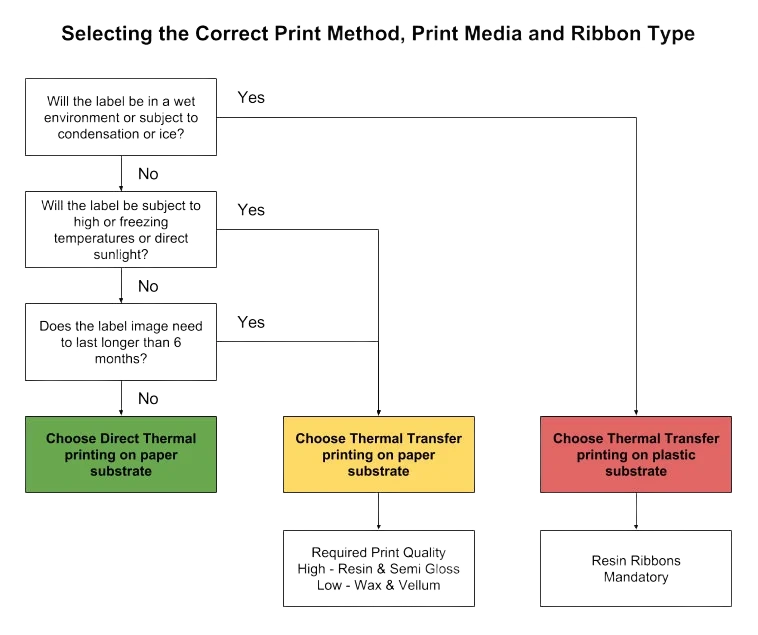
Three questions determine the right choice:
1. How long must the label remain legible? Less than 6 months = direct thermal acceptable. More than 6 months = thermal transfer.
2. What’s the environment? Cool, dry, indoor = direct thermal is fine. Warm, damp, outdoor, or chemical = thermal transfer required.
3. Will handling be rough? Careful handling = direct thermal acceptable. Rough handling or multiple shipment legs = thermal transfer essential.
At Positive ID Labels, we supply both direct thermal labelling solutions and thermal transfer label solutions plus ribbons optimized for specific applications. We help you avoid the cost of reprinting labels because they faded too quickly.
Not sure whether direct thermal or thermal transfer is right for your application? Call us on 01332 864895. Describe your environment, expected label lifespan, and handling conditions. We’ll recommend a specification that lasts long enough without overspecifying. Or fill out our contact form and we’ll call you back.
Choosing the right thermal printing labels upfront saves money by avoiding reprints due to faded or degraded labels.