Beverage Can Label Sizes: A Guide to Labelling Beer, Cider and Soft Drinks
Beverage cans requiring can labels have taken over the drinks aisle. They’re light, they chill fast, they’re durable, and they’re endlessly recyclable — so it’s no surprise that beer, cider and soft drinks have moved decisively onto aluminium.
But “putting it in a can” isn’t one decision; it’s several. The size and shape you choose affects shelf presence, packing, cost — and, if you’re not printing straight onto the metal, how your label is made. Here’s a plain-English guide to the common can sizes, and what they mean when it comes to labelling.
First, a word on decorating a can label
Most cans on the shelf are printed directly onto the metal by the can maker. That looks superb, but it comes with a catch: minimum orders run into the hundreds of thousands per design. For a small producer, a seasonal special, a limited edition or a trial flavour, that simply isn’t viable.
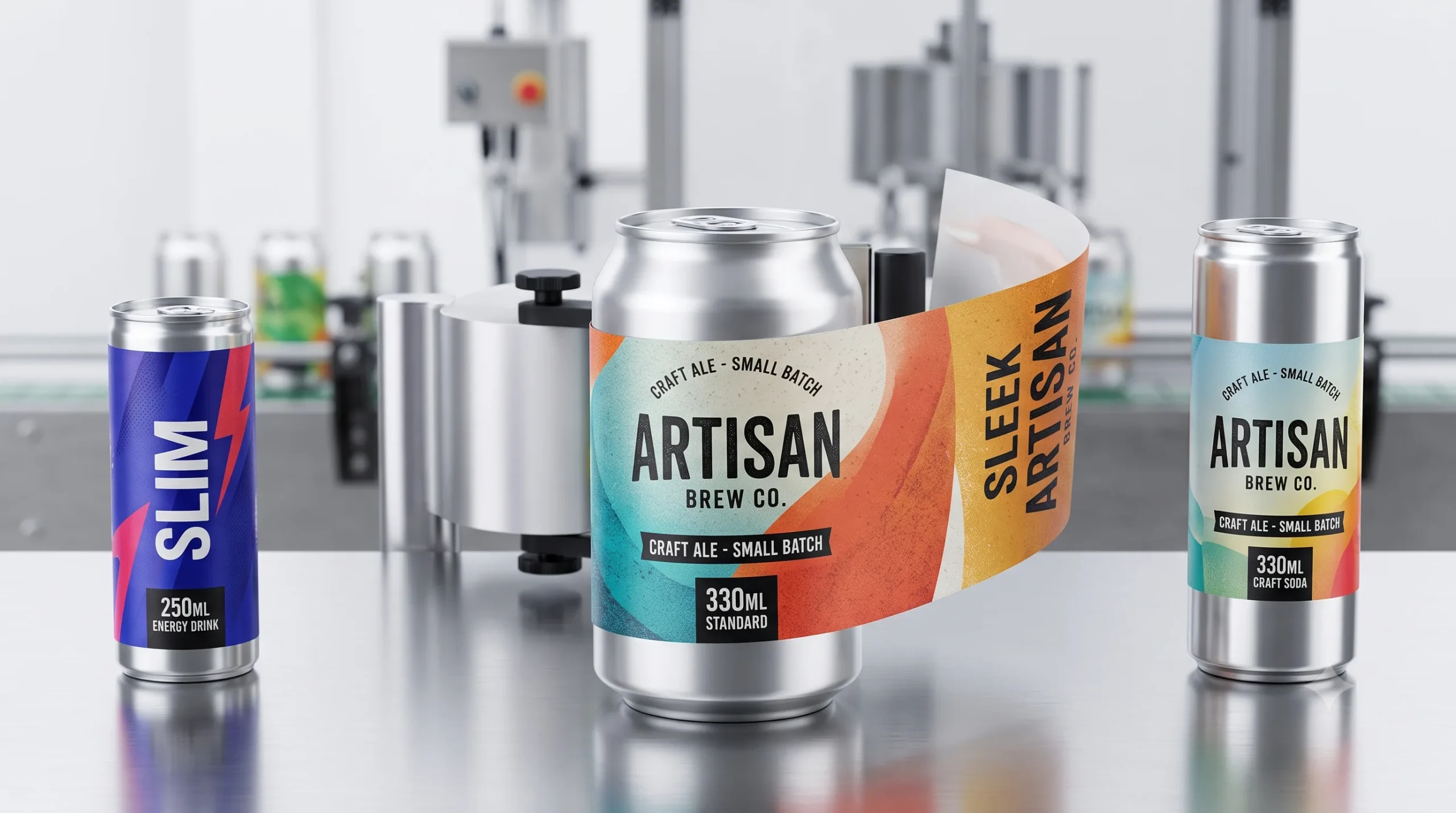
That’s where a pressure-sensitive (self-adhesive) can label comes in. You fill a plain “brite” can and apply a can label afterwards — so you can run small batches, change your can label artwork whenever you like, and get to shelf without committing to a pallet-load of a single design.
The three diameters that matter
Here’s the part most people miss: cans don’t come in one width. There are three common body diameters, and it’s the diameter — not the volume — that sets the length of your label.
- Slim — 53 mm diameter. Tall and narrow. Mixers, slimline tonics, seltzers and RTDs.
- Sleek — 57–58 mm diameter. The “premium” middle ground; energy drinks, sparkling water, craft soft drinks.
- Standard (or “classic”) — 66 mm diameter. The familiar cola/lager shape; the workhorse of beer and cider.
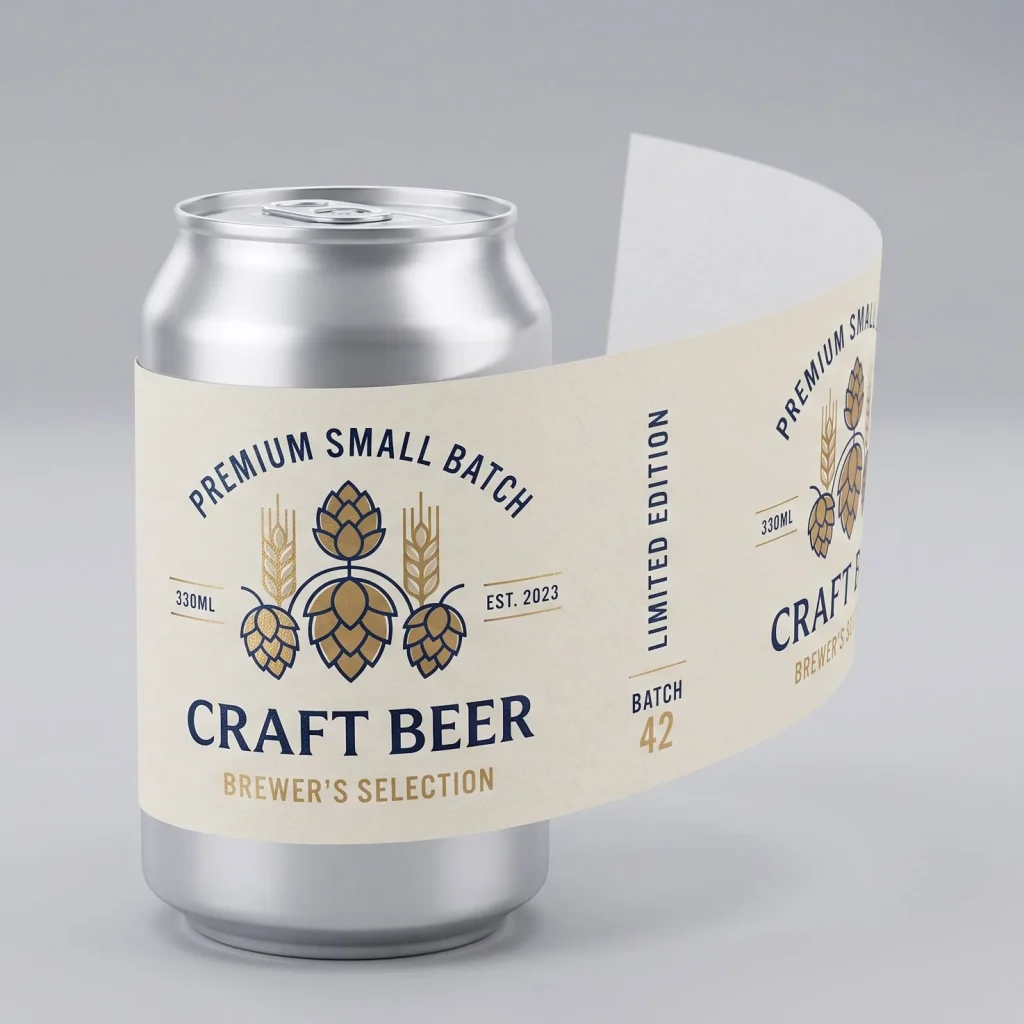
Wrap a label around the straight body of a can and its length is simply the circumference — diameter × π:
- Slim (53 mm) → about 167 mm around
- Sleek (58 mm) → about 182 mm around
- Standard (66 mm) → about 207 mm around
(Add a few millimetres for the overlap where the label’s two ends meet.)
The sizes, side by side
Volumes overlap between the diameter families — which is exactly why the same “330ml” can look tall and slim on one shelf and short and stout on another. These are representative dimensions; heights vary by a few millimetres between can makers, so exact measurements help to get the right can label dimensions.
| Volume | Family | Body diameter | Approx. height | Typical use |
|---|---|---|---|---|
| 150 ml | Slim | 53 mm | ~88 mm | Slimline mixers (Schweppes, Fever-Tree) |
| 200 ml | Slim | 53 mm | ~104 mm | Mixers, small soft drinks |
| 250 ml | Slim | 53 mm | ~134 mm | Energy drinks, RTDs |
| 250 ml | Sleek | 58 mm | ~115 mm | Sparkling water, soft drinks |
| 250 ml | Standard (“squat”) | 66 mm | ~92 mm | Soft drinks, mixers |
| 330 ml | Sleek | 58 mm | ~145 mm | Craft soft drinks, energy |
| 330 ml | Standard | 66 mm | ~115 mm | The classic soft-drink / lager can |
| 440 ml | Standard | 66 mm | ~150 mm | The UK’s favourite beer & cider size |
| 500 ml | Standard | 66 mm | ~168 mm | Continental lagers, craft beer |
| 568 ml (pint) | Standard | 66 mm | ~188 mm | Pint cans — ales and stouts |
A few things worth pulling out:
- The “tall” 250 and 330 are real. A 250ml comes squat (66 mm standard), medium (58 mm sleek) or tall and slim (53 mm). A 330ml comes as the familiar standard can or as a noticeably taller, slimmer sleek can. Same liquid, very different silhouette — and a very different can label size.
- 125 ml is rare. The smallest common UK format is the 150 ml slimline mixer. A “125 ml” can is usually a one-off or a non-standard import rather than a stock aluminium size.
- 440 ml rules in the UK. It’s the dominant format for beer labels and cider labels here — well worth knowing when you plan your range.
What the size means for your label
Once you’ve settled on a can, three things shape the label:
Length = circumference + overlap. Use diameter × π (above), then add roughly 3–5 mm so the trailing edge laps neatly over the leading edge for a gap-free wrap.
Height is shorter than the can. A label never runs the full height. Cans “neck in” at the top and have a rolled rim (chime) top and bottom, so the printable body window is shorter than the overall height. Leave clearance top and bottom — your can supplier can give you the exact printable area for each format.
Material and adhesive have to survive the cold and the wet. Cans live in fridges, ice buckets and chillers. A paper label will cockle and lift; for cans you want a synthetic (filmic) face material and an adhesive rated for cold, damp application and condensation, so the label stays put and stays crisp from fill to fridge to hand.
Make sure your label is legal
Once you know the size of your labels, you need the design to work with it. Read our alcohol labelling guide or our blog post about balancing beer labelling brand and compliance. It is also beneficial to follow the guidance on alcoholic drinks labelling offered by the Portman Group.
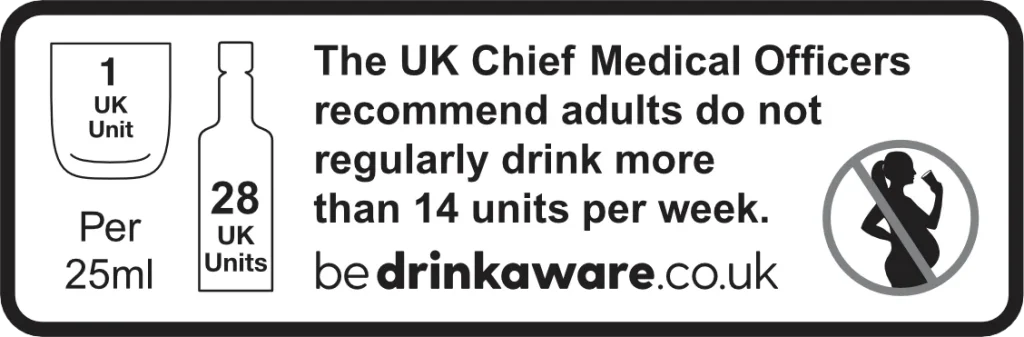
Then design your label in accordance with our artwork guidelines so we can make your can labels with minimal delay.
In short
Pick your volume, then pick your diameter family — slim, sleek or standard — because that’s what your label length hangs off. Keep the height inside the printable window, choose a filmic material that shrugs off condensation, and you’ve got a can that looks the part without a six-figure print run.
Thinking about labels for your beer, cider or soft drink? Positive ID Labels produces pressure-sensitive can labels in small runs — ideal for craft producers, limited editions and trial flavours. Call us on 01332 864895 to talk it through.