Choosing a Food Labelling System: Six Questions to Ask First
Most food businesses choose a food labelling system the wrong way round. They compare features across suppliers, pick the one with the longest list, and discover six months later that the problem was never features – it was whether the person on the early shift can use it without ringing anyone.
The short answer on what actually determines success: whether untrained staff can operate the food labelling system under pressure, whether your recipe data can get into it without being retyped, and whether someone answers the phone when it stops working at six in the morning. Everything else is secondary.
Positive ID Labels set up and support food labelling systems for kitchens, delis, butchers and food producers across the UK. These are the six questions worth answering before you compare a single feature list.
1. Who Will Actually Use the Food Labelling System?
This is the question that decides more outcomes than any other.
If the person printing labels at six in the morning is a part-time member of staff who started last week, the system has to be operable by them without supervision. Not “trainable over a fortnight”. Operable on day one.
Kitchens run on staff turnover. A system that depends on one experienced person knowing its quirks becomes a liability the moment that person leaves. Test any food labelling system against your least experienced likely user, not your most capable one.
The practical test: can someone select a product and print a correct label in under ten seconds, having been shown once? What measures can you take to ensure the employee does not damage the system?
2. What Recipe Data Does a Food Labelling System Need?
Every food labelling system needs to know what is in your products. The question is how that information gets in.
If your recipes are in spreadsheets, in a supplier’s system, or in somebody’s head, getting them into a labelling system is a real piece of work. Doing it once, properly, is fine. Doing it repeatedly because the system cannot import is not.
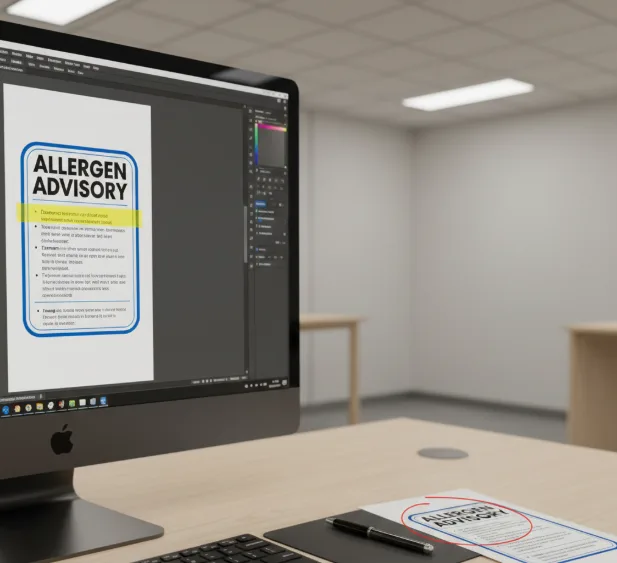
Ask specifically how ingredient and allergen data is entered, updated and imported. A system that requires manual retyping introduces exactly the transcription errors that automation is supposed to remove.
Positive ID Labelling have developed Nutridata, a nutrition and allergen data software solution to help food businesses meet their legal obligations for their food labels.
3. What Happens to Your Food Labelling System When a Recipe Changes?
Recipes change. Suppliers substitute ingredients. Regulations get updated.
The question is what that costs you. In a well-configured food labelling system, changing an ingredient updates every product containing it, and the next label printed is correct. In a poorly configured one, someone has to find and edit every affected product individually.
That difference does not show up in a demonstration. It shows up eighteen months later when a supplier changes a recipe and you discover how many products it touched.
Ask how a single ingredient change propagates. The answer tells you a great deal about the underlying data structure.
Nutridata has been specifically designed for food businesses to ensure ingredient changes can cascade out across all products with ease.
4. Can Your Food Labelling System Handle the Busiest Hour?
Systems are usually demonstrated in calm conditions. They are used in the opposite.
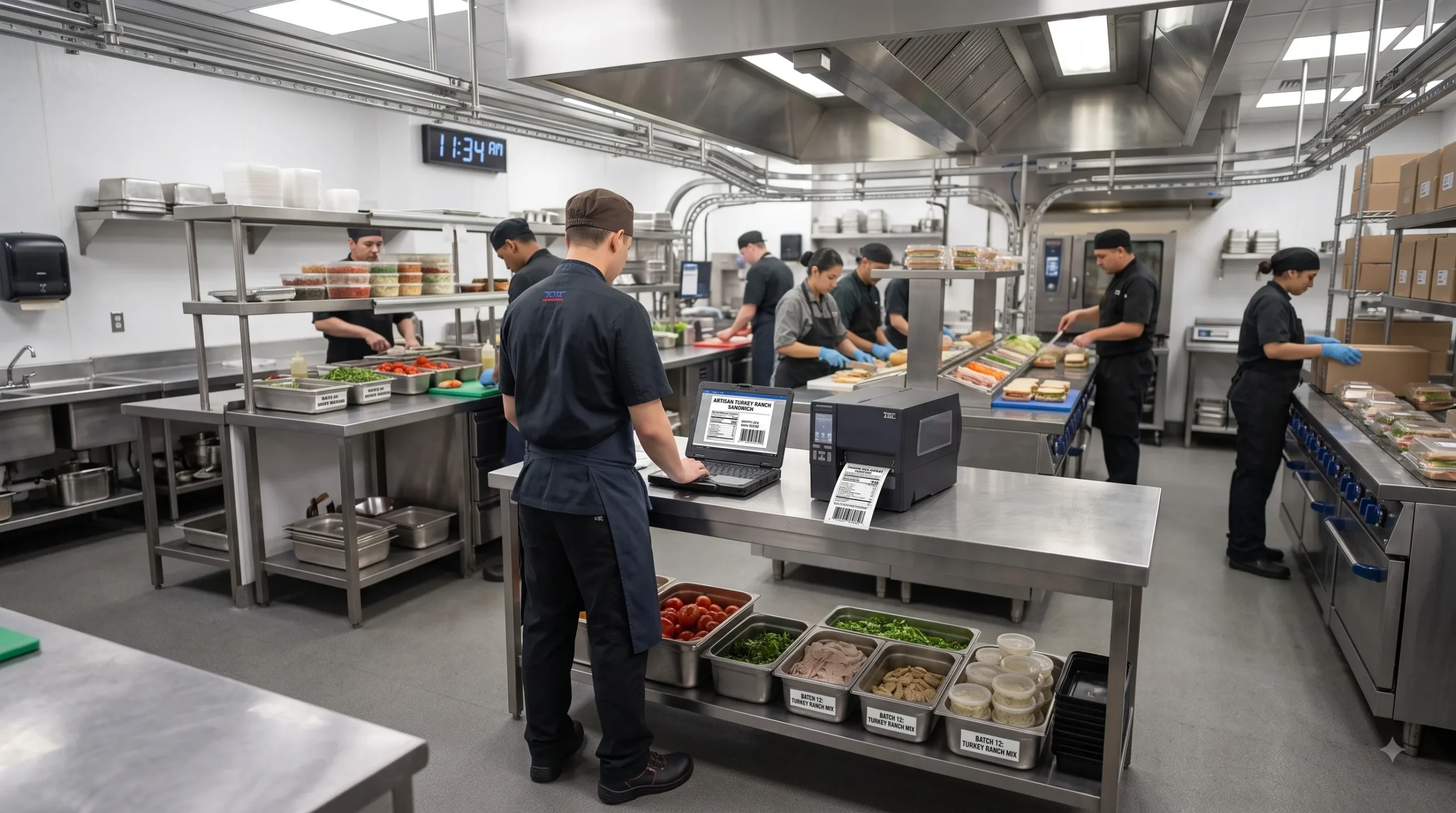
Think about your peak: the fifteen minutes before service when everything needs labelling at once. Can the food labelling system keep up? Is the screen usable with wet or gloved hands? Can staff find the right product quickly when there are two hundred in the list?
Search and navigation matter more than they sound. A system with a beautiful interface that takes six taps to reach a common product will be worked around within a week, and workarounds are where compliance failures start.
Learn more about Positive ID Labelling’s LabelData software solution. An Android app that lets users print labels using any Android device on the same network as the printer.
5. What Does Support Actually Look Like?
When a labelling system fails, food does not go out. It is not an inconvenience; it is a stop.
Ask three specific questions. Who answers the phone, and are they the people who set the system up? What are the hours, and do they cover when you actually operate? Is support included or charged separately?
There is a meaningful difference between a supplier who sold you a system and one who set it up, knows your configuration and answers the phone. The second is worth paying for, and you will find out which you have on the worst possible morning.
Positive ID Labelling set up your system with you and knows how it works. Our in-house technical support is raved about in our Trustpilot Reviews. We simply ask for AnyDesk to be installed on your computer and we can remote in and fix your labelling system in moments.
For confirmation, read this case study about fixing a broken system or this case study upgrading a system after an environmental health audit failure.
6. What Do the Regulations Actually Require of You?
Not every food business needs the same thing, and buying more system than you need is as much a mistake as buying less.
If you prepack food for direct sale, Natasha’s Law requires a full ingredient list with allergens emphasised on the label. That means your system must hold complete recipe data, not just product names.
If you sell loose or prepare to order, your obligations differ. If you supply other businesses, different rules again apply.
Work out what you are actually required to produce before deciding what will produce it. That is a conversation worth having with someone who does this daily rather than working it out from a website.
Positive ID Labelling have specialised in food labelling and developing food labelling systems for 15 years, so small food producers can meet their labelling objectives with ease.
What Choosing a Food Labelling System Comes Down To
In practice, most food businesses need four things working together for their food labelling system: somewhere to hold recipe and allergen data accurately, something to turn that into a compliant label, and a printer that works every shift without attention and finally, a supply of high-quality labels that work every time.
The systems that succeed are the ones where those four pieces were specified together by someone who understood the kitchen. The ones that fail are usually assembled from parts that each work fine alone.
Call 01332 864895 if you want a second opinion on a specification you have been quoted – Positive id labels can offer:
- Nutridata nutrition labelling, allergen and QUIDding software free of charge
- Label Direct or EnLabel labelling software to print your labels
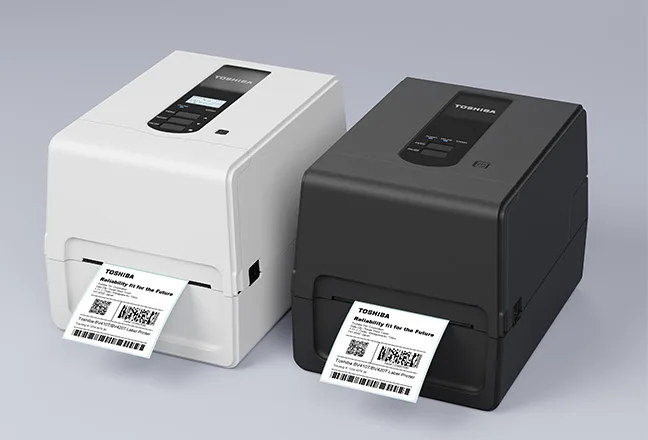
- Direct thermal label printers from TSC
- Labels made with your branding and specification
- Label Data Android label driver software to make label printing a doddle – also free of charge with a sandwich or food labelling bundle.
Frequently Asked Questions
Do I need software, or will a simple label printer do? If your labels carry full ingredient lists, you need software holding that data. If you are printing dates and product names only, a simpler setup may be sufficient. The determining factor is what the regulations require you to show.
Can staff be trained quickly? They should not need much training at all. A well-configured system should be operable after a single demonstration. If it needs a training course, ask whether it is the right system for a kitchen environment.
What happens if the printer fails mid-service? This is worth planning for before it happens. For a small operation, a spare printer costs less than a day of not despatching. Ask your supplier what their turnaround is on a replacement, and whether they hold stock.
Can I import recipes from a spreadsheet? Some systems allow this and some do not, and it makes a substantial difference to setup effort. Ask specifically, and ask to see it done with a sample of your own data rather than a prepared demonstration file.
How much does a food labelling system cost? It depends on the number of sites, the printer specification and how much setup is involved. What matters more is what is included: whether the software, support and configuration come as one package or separately. Ask for a total picture, not a headline figure.
Will it work with our existing printer? Often yes, particularly with mainstream thermal printers. Tell us the make and model and we will confirm before you commit to anything.
Talk It Through Before You Choose
We would rather understand your kitchen than sell you a system. If a simple setup does the job, we will say so, and if what you have already works we will tell you that too.
Tell us how many products you label, who does the labelling and what your busiest hour looks like. That is usually enough for us to point you at the right answer.
Call 01332 864895 or send your requirements through the enquiry form. Setup and support come as part of the relationship, not as a separate line.