
Date Labelling Guide: Use By, Best Before and More
Date labels are one of the most visible – and most misunderstood – elements on any food product. Get them wrong and you risk either a criminal offence (selling food past its use by date) or unnecessary waste (consumers throwing away perfectly safe food because they misread a best before date). For food businesses, choosing the right date mark, formatting it correctly, and pairing it with appropriate storage instructions is a fundamental part of food labelling compliance.
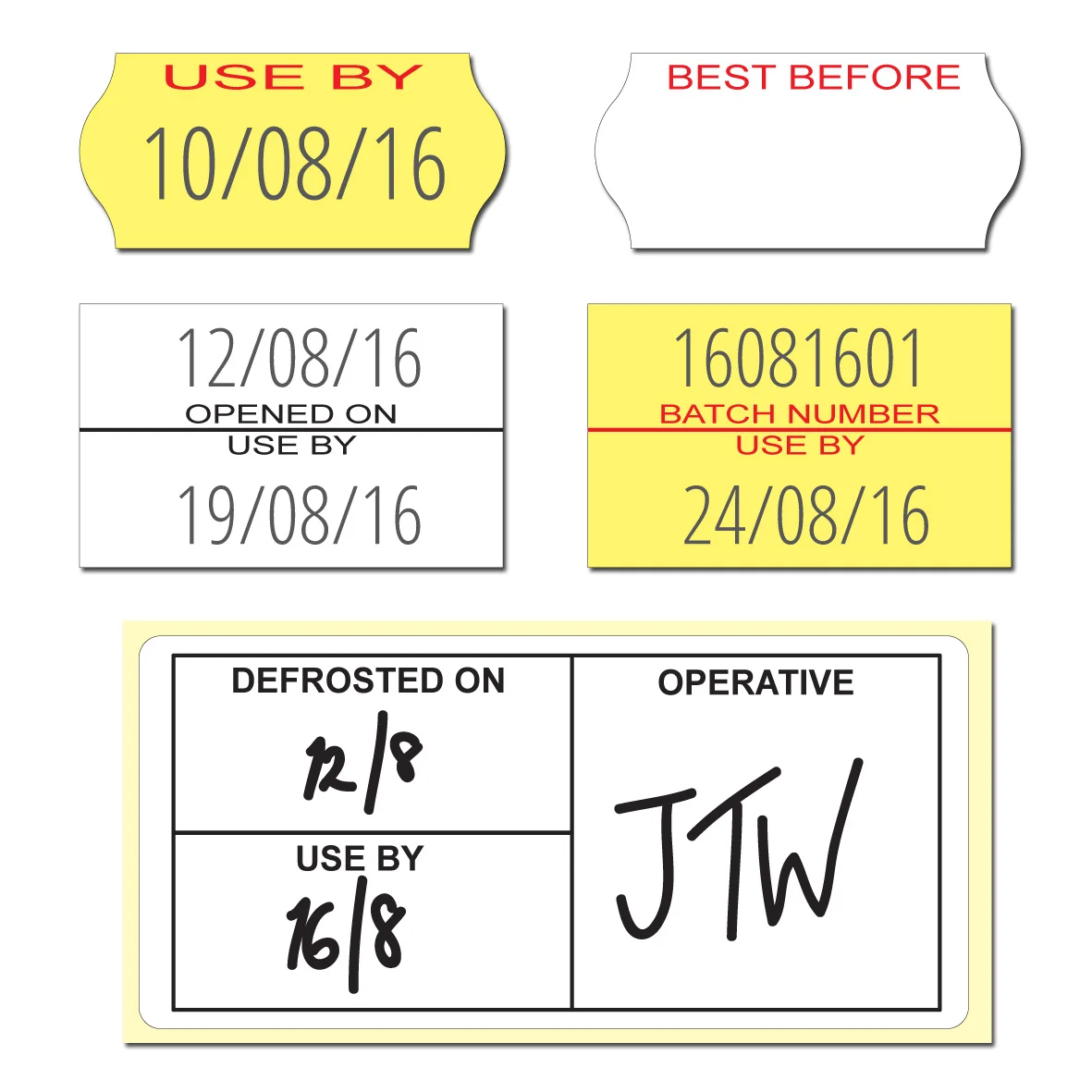
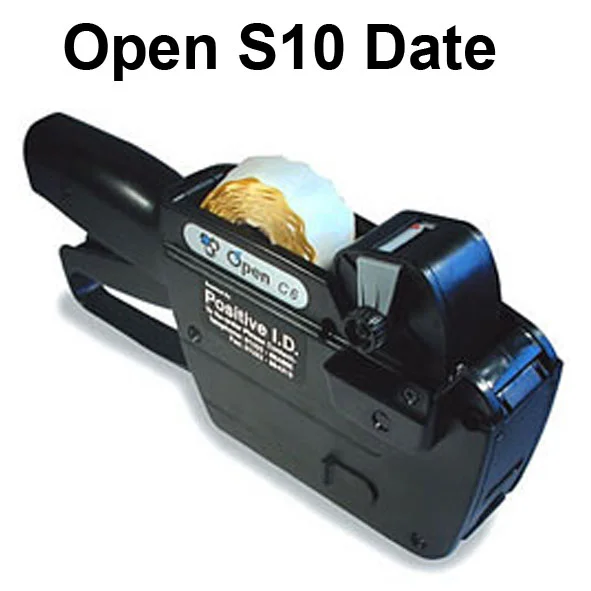
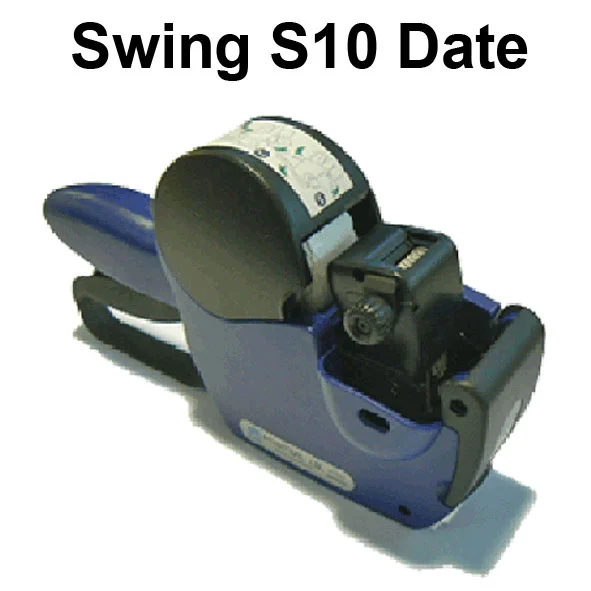
This guide explains the UK rules on date labelling in practical terms. We cover the legal differences between use by and best before dates, how to format them correctly, which products are exempt, what storage instructions you need to include, and the common mistakes that trip up food businesses of every size.
Contents
- The Legal Framework
- Use By Dates: Safety
- Best Before Dates: Quality
- Best Before End (BBE)
- Use By vs Best Before: A Quick Comparison
- Display Until and Sell By Dates
- Date Format Requirements
- Storage Instructions
- Once Opened Instructions
- Freezing and Date Labels
- Frozen On Dates
- Foods Exempt from Date Marking
- Eggs: Special Date Labelling Rules
- Selling Food Past Its Date
- Lot Marking and Batch Codes
- The Food Waste Trend: Best Before Replacing Use By
- Common Date Labelling Mistakes
- Practical Date Labelling Checklist
- Getting Your Date Labels Right
The Legal Framework
Date labelling requirements for food sold in Great Britain are set out in the UK-assimilated Food Information to Consumers Regulation (EU) No. 1169/2011, commonly known as EU FIC, which was retained in UK law after Brexit. This regulation is enforced through the Food Information Regulations 2014 (with equivalent legislation in Scotland, Wales, and Northern Ireland).
The regulation makes it mandatory for most pre-packed food products to carry either a date of minimum durability (best before or best before end) or a use by date, along with any special storage conditions needed for the food to remain safe or at its best until that date. The choice between use by and best before is not arbitrary – it depends on the microbiological risk profile of the product, and getting it wrong has legal consequences.
Enforcement falls to local authority Trading Standards officers and Environmental Health teams. The Food Standards Agency (FSA) provides guidance, and WRAP (the Waste and Resources Action Programme) publishes industry best practice on date labelling to help reduce food waste while maintaining safety.
Use By Dates: Safety
A use by date is about food safety. It is the most critical date mark on any food product. After the use by date, the food may become unsafe to eat, even if it looks and smells perfectly fine. Harmful bacteria like Salmonella, E. coli, and Listeria do not necessarily produce visible signs of spoilage or detectable odours – you cannot rely on the sniff test for use by products.
Use by dates are required on foods that, from a microbiological point of view, are highly perishable and therefore likely, after a short period, to constitute an immediate danger to human health. In practice, this means most chilled products with a relatively short shelf life. Common examples include fresh meat and poultry, fish and seafood, ready-to-eat salads and prepared foods, dairy products such as soft cheese and cream, sandwiches and other chilled convenience foods, and fresh pasta.
The key legal points about use by dates are straightforward but absolute. Food is safe to eat until midnight on the date shown – but not after. It is a criminal offence to sell, offer for sale, or display for sale any food after its use by date. Food past its use by date should not be eaten, cooked, or frozen. The use by date is only valid if the consumer follows the storage instructions on the label (for example, “keep refrigerated at 5°C or below”).
There is one important exception: food can be cooked on or before the use by date, then cooled and stored in the fridge. The FSA advises that cooked food should be eaten within 48 hours or frozen for later use. Additionally, food can be frozen before the use by date to extend its life – we cover this in detail in the freezing section below.
Best Before Dates: Quality
A best before date is about food quality, not safety. It indicates the date until which the food retains its specific properties – taste, texture, aroma, appearance, and nutritional value – when stored according to the instructions on the label. After the best before date, the food is still safe to eat but may not be at its best.
Best before dates appear on a wide range of products, including canned and tinned foods, dried goods (pasta, rice, cereals), frozen foods, biscuits and snacks, condiments and sauces, cooking oils, and confectionery. Essentially, if a food business is confident there is no safety risk in consuming the product after the durability date, a best before date should be used rather than a use by date.
Unlike use by dates, it is not an offence to sell food past its best before date, provided the food remains of acceptable quality and is fit for human consumption. Many retailers sell products past their best before dates at reduced prices, and this is perfectly legal. However, the manufacturer is responsible for the quality of the product up to the stated best before date. If a retailer chooses to sell the product after that date, they take on responsibility for its quality.
The best before date is only accurate if the food is stored according to the instructions on the packaging. A tin of beans stored in a cool, dry cupboard may well be fine for months beyond its best before date, but the same tin stored in a damp garage might deteriorate much faster.
Best Before End (BBE)
You will sometimes see “Best Before End” (often abbreviated to BBE) instead of “Best Before” on products. This is not a different type of date – it is simply a formatting variation used when the date does not include a specific day.
The regulation specifies that you should use “Best Before” when the date includes an indication of the day (e.g. “Best Before 15 March 2026”). You should use “Best Before End” when the date gives only a month and year (e.g. “Best Before End March 2026”) or only a year (e.g. “Best Before End 2027”). This distinction matters because it tells the consumer whether the date refers to a specific day or the end of a month or year.
Use By vs Best Before: A Quick Comparison
The fundamental difference between these two date marks is straightforward: use by = safety, best before = quality. A use by date means the food may become dangerous to eat after that date. A best before date means the food may lose some quality after that date but remains safe.
Use by dates apply to highly perishable, microbiologically risky foods. It is illegal to sell food past its use by date. The food should not be consumed after the date, and the sniff test is not reliable. Best before dates apply to foods where quality deteriorates over time but safety is not at risk. Food can legally be sold past its best before date. The food is still safe to eat, though it may not taste or look as good. Consumers can use sensory checks (look, smell, taste) to judge quality.
Choosing the wrong date type is a serious error. Applying a best before date to a product that should carry a use by date could put consumers at risk. Applying a use by date to a product that only needs a best before date generates unnecessary food waste. If you are uncertain which applies to your product, seek advice from a food safety professional or your local Trading Standards office.
Display Until and Sell By Dates
“Display until” and “sell by” dates are not required by law and have no legal standing in UK food labelling legislation. They are purely stock management tools used by retailers to manage rotation and shelf placement. The Food and Drink Federation (FDF) and WRAP both recommend against using these dates on consumer-facing labels, as they cause confusion.
The problem is straightforward: consumers frequently mistake “display until” or “sell by” dates for safety dates. A product with a “sell by” date of 15 March and a “best before” date of 20 March may get thrown away on the 16th by a consumer who assumes the sell by date means it is no longer safe. This contributes directly to the estimated 9.5 million tonnes of food wasted in the UK each year.
If you use display until or sell by dates for internal stock control, industry best practice is to keep them as coded information that consumers cannot easily misinterpret, or to use them only on outer packaging that is removed before the product reaches the consumer. The only exception is eggs, which have specific sell-by rules under separate regulations.
Date Format Requirements
The regulations specify how dates must be formatted on food labels. The overriding principle is that dates must be given in uncoded form – no internal codes, week numbers, Julian dates, or other systems that consumers cannot readily understand.
For use by dates, the format must be “Use by” followed by the day and month (e.g. “Use by 23 January”). You may add the year if you wish. The date must be given in the order day, month, and optionally year. To avoid ambiguity, it is strongly recommended to write the month in words rather than numbers. “05/06” could mean 5 June or 6 May, but “5 June” can only mean one thing.
For best before dates, the format depends on the shelf life of the product. Products with a shelf life of up to 3 months should be marked with “Best Before” followed by the day and month (e.g. “Best Before 23 January”). The year may optionally be added. Products with a shelf life of 3 to 18 months should be marked with either “Best Before” (day/month/year) or “Best Before End” (month/year) – e.g. “Best Before End March 2026”. Products with a shelf life of more than 18 months may be marked with “Best Before End” followed by just the year – e.g. “Best Before End 2028”.
In all cases, the date can appear on the label itself or the label can state where to find it on the packaging (e.g. “Use by: see lid” or “Best Before End: see base of tin”). If the product consists of multiple individually pre-packed items, the use by date must appear on each individual item.
The date marking must be clearly legible, easily visible, and indelible. It must not be obscured by price stickers, promotional labels, or any other marking. Under the Food Information Regulations, all mandatory label text – including dates – must have a minimum x-height of 1.2mm for standard packaging (0.9mm for packaging with a largest surface area of less than 80cm²).
Storage Instructions
A date label without appropriate storage instructions is potentially meaningless – and potentially dangerous. The EU FIC Regulation requires that where foods need special storage conditions to remain safe or at their best until the stated date, those conditions must be indicated on the label.
For use by products, storage instructions are essential because the safety date is only valid under the specified conditions. If milk is labelled “Use by 20 March” with the instruction “Keep refrigerated below 5°C”, but the consumer stores it at room temperature, it may become unsafe well before the stated date. The storage instruction makes the use by date meaningful.
Common storage instructions include “Keep refrigerated” or “Keep refrigerated at 5°C or below” for chilled products, “Store in a cool, dry place” for ambient products, “Keep frozen at -18°C or below” for frozen products, “Store in a cool, dark place” for products sensitive to light, and “Refrigerate after opening” for products that are shelf-stable when sealed but perishable once opened.
While it is a mandatory legal requirement to include storage instructions where special conditions apply, it is good practice to include them on all products. Even for shelf-stable products, a simple “Store in a cool, dry place” gives the consumer useful guidance and helps ensure the product reaches its best before date in good condition.
Once Opened Instructions
Many food products have a different shelf life once the packaging has been opened. The protective atmosphere inside the sealed pack is lost, the product is exposed to airborne bacteria, and the clock starts running faster. The regulation requires that where appropriate, storage conditions and/or time limits for consumption after opening must be indicated.
Typical once-opened instructions include statements like “Once opened, keep refrigerated and consume within 3 days”, “Once opened, use within 5 days and by the use by date”, “Refrigerate after opening and consume within 48 hours”, and “Once opened, store in a cool place and use within 2 weeks”.
Notice the second example: “use within 5 days and by the use by date“. This is an important point. The once-opened instruction does not override the use by date. If a product has a use by date of 20 March and is opened on 19 March, the once-opened instruction of “consume within 3 days” does not extend the life to 22 March. The use by date of 20 March still applies. The consumer should always follow whichever date comes first.
For food businesses producing items like sauces, dressings, dairy products, and chilled prepared foods, getting the once-opened instruction right requires proper shelf-life testing. The stated open life must be supported by microbiological evidence – you cannot simply guess.
Freezing and Date Labels
Freezing acts as a pause button on food. When food is frozen correctly, bacteria cannot grow, so the food does not deteriorate from a safety perspective. This has important implications for date labelling.
Food can be frozen on or before its use by date to extend its life. Once frozen, the use by date effectively becomes suspended. However, once the food is defrosted, the pause button is released. The FSA advises that defrosted food should be cooked within 24 hours and eaten or re-frozen promptly. Food should only be defrosted as needed, not left to thaw and then re-frozen without cooking.
There is an important restriction: you should not freeze food after the use by date has passed. Once the use by date has expired, the food may already be unsafe, and freezing does not kill bacteria – it simply stops them growing. Thawing previously unsafe food would allow any existing bacteria to resume multiplying.
For businesses, if you freeze a product that originally carried a use by date, you become responsible for applying a new appropriate durability date and providing correct storage instructions. This requires proper food safety knowledge and, ideally, supporting microbiological data. A food business operator can change a best before date if they freeze a product, but they then take on responsibility for the accuracy of the new date and must provide appropriate storage and usage instructions.
While freezing preserves safety, the texture of some foods can be affected by long periods in the freezer. This does not create a safety issue, but it is worth noting on the label where relevant – for example, “Best consumed within 3 months of freezing for optimal texture.”
Frozen On Dates
Certain frozen products have an additional date labelling requirement. Frozen meat, frozen meat preparations (such as burgers and sausages), and frozen unprocessed fishery products must carry a “frozen on” date indicating when the product was first frozen.
The format must be the words “Frozen on” followed by an uncoded date showing the day, month, and year, in that order. Where the product has been frozen more than once, the date of first freezing must be declared. This “frozen on” date is required in addition to the standard best before or use by date – it does not replace it.
This requirement is particularly relevant for butchers and meat processors who freeze products, as well as fishmongers and seafood suppliers. If you produce frozen food labels, ensure your label design includes space for both the standard durability date and the frozen on date.
Foods Exempt from Date Marking
Not all food products need to carry a use by or best before date. The regulation provides a specific list of exemptions for products where date marking is considered unnecessary – either because the food is naturally resistant to spoilage, has such a short obvious life that a date would serve no purpose, or is consumed so quickly that deterioration is not a practical concern.
The exempt products are: fresh fruit and vegetables that have not been peeled, cut, or similarly treated (though sprouting seeds and similar products must be date-marked); wines, liqueur wines, sparkling wines, aromatised wines, and similar products obtained from fruit other than grapes; beverages with an alcoholic strength by volume of 10% or more; flour confectionery and bread that is normally consumed within 24 hours of preparation; vinegar; cooking salt; solid sugar; confectionery products consisting almost solely of flavoured or coloured sugars; and chewing gum.
The logic behind these exemptions varies. Alcohol above 10% ABV is naturally preserved and effectively does not spoil. Fresh, uncut fruit and vegetables show visible signs of deterioration that consumers can easily assess. Bread bought from a bakery is consumed the same day. Vinegar, salt, and sugar are inherently stable for extremely long periods.
Even where a product is exempt from date marking, it may still be good practice to include a best before date. This helps consumers and aids stock rotation. Some exempt products also have specific requirements under other legislation – for example, soft drinks, fruit juices, and fruit nectars sold in containers of 5 litres or more intended for catering establishments are exempt from date marking under the general rules, but may have requirements under other specific legislation.
Eggs: Special Date Labelling Rules
Eggs are subject to their own specific date labelling rules under the assimilated Commission Regulation (EC) No 589/2008. These rules create a unique situation where eggs can carry both a best before date and a sell by/display until date.
The best before date on eggs must be no more than 28 days from the date of laying. Eggs must be sold to the consumer (or delivered to the final consumer) within 21 days of laying. Where no sell by or display until date is shown, eggs should be removed from retail sale 7 days before the best before date.
This is one of the few categories where the FSA advises against consuming the product after the best before date. Eggs can contain Salmonella bacteria, which may begin to multiply after the best before date even in eggs that were previously safe. For this reason, the guidance is to not eat eggs after the best before date – a notable exception to the general principle that best before is about quality rather than safety.
Selling Food Past Its Date
The legal position is clear-cut for use by dates: it is an offence to sell or display for sale food after the use by date. “Use by 23 January” means the food must not be on sale after midnight on 23 January. If an enforcement officer finds the product still on display on the morning of 24 January, an offence has been committed.
For best before dates, the position is more flexible. Food can legally be sold after its best before date, provided it remains of acceptable quality and is fit for human consumption. Many retailers deliberately sell products past their best before dates at reduced prices, and dedicated surplus food retailers have built entire business models around this practice. However, if a food business chooses to sell a product past its best before date, they take on responsibility for its quality. Trading Standards may take action if food sold past its best before date is clearly of unacceptable quality.
The Food Safety Act 1990 provides an additional safety net. It is an offence to sell food that is not of the nature, substance, or quality demanded by the consumer. This applies regardless of date labels – even food within its date can fall foul of this requirement if it has been damaged, contaminated, or stored improperly.
Lot Marking and Batch Codes
Closely related to date labelling is the requirement for lot marking (also called batch coding). Most pre-packed foods must carry a lot or batch mark to enable product traceability and, if necessary, efficient product recall.
Where a product carries a use by or best before date that includes at least the day and month (in that order), this date can serve as the batch identification – no separate lot mark is needed. However, where the durability date is less specific (e.g. “Best Before End 2027”), a separate lot mark must be provided. If a separate lot mark is used, it must be prefixed with the letter “L” if it cannot be clearly distinguished from other codes on the label.
The lot mark must be clearly visible, clearly legible, and indelible. It does not need to be meaningful to consumers – its purpose is for traceability along the supply chain and for use by enforcement authorities if a recall is required. Manufacturers should consider the size of their production batches carefully: smaller batches mean more precise traceability in the event of a recall, limiting the financial and reputational impact.
The Food Waste Trend: Best Before Replacing Use By
In recent years, several major UK supermarkets have made headline news by switching certain products from use by dates to best before dates, or by removing best before dates from some product lines altogether. This trend is driven by efforts to reduce food waste – WRAP estimates that approximately 4.5 million tonnes of edible food is wasted in UK households each year, and date label confusion is a significant contributor.
Notable moves include supermarkets removing best before dates from many fresh fruit and vegetable lines, some dairy brands switching milk from use by to best before dates, and retailers adopting best before dates on yoghurts that previously carried use by dates. The reasoning is sound: research showed that approximately 490 million pints of milk and 54,000 tonnes of yoghurt were being discarded by UK households each year, much of it unopened.
For food manufacturers and producers, any decision to switch from a use by date to a best before date must be backed by robust microbiological evidence demonstrating that the product does not present a safety risk after the stated date. This is not a labelling decision – it is a food safety decision that requires proper shelf-life testing and validation. If you are considering making such a change, work with a qualified food safety laboratory or consultant to ensure you have the supporting data.
Common Date Labelling Mistakes
Even experienced food businesses make date labelling errors. Here are the most common mistakes and how to avoid them.
Using the wrong date type. Applying a best before date to a microbiologically high-risk product that should carry a use by date is a safety issue. Conversely, applying a use by date to a stable product generates unnecessary waste. Base your decision on the food safety profile of the product, not on what competitors do or what seems convenient.
Ambiguous date formats. Writing “05/06/26” could mean 5 June 2026, 6 May 2026, or even June 2005. Always write the month in words to prevent any confusion: “5 June 2026” or “05 Jun 2026”. This simple step eliminates a common source of consumer complaints and Trading Standards queries.
Missing storage instructions. A use by date without storage instructions is essentially meaningless. If the product needs refrigeration for the use by date to be valid, you must say so on the label. Failing to include appropriate storage instructions could make you liable if a consumer stores the product incorrectly and becomes ill.
Missing or incorrect once-opened instructions. Many products have a shorter life once opened than the use by or best before date would suggest. If your product needs specific handling after opening, the label must say so. Ensure the once-opened instruction does not inadvertently suggest the product can be used beyond its original use by date.
Using “sell by” or “display until” on consumer-facing labels. These dates confuse consumers and are not recommended by the FSA, WRAP, or the Food and Drink Federation. Use them for internal stock management only, and keep them away from the consumer-facing part of the label.
Obscured date marks. Price stickers, promotional labels, and shrink wrapping that covers the date mark make it illegible. The date must be clearly visible and easily readable at all times. Design your label layout to keep the date in a position that will not be covered by downstream labelling.
Using coded date systems. Internal production codes (like Julian dates, week numbers, or proprietary coding systems) are not acceptable as consumer-facing date marks. The date must be in a format that ordinary consumers can readily understand.
Forgetting the “frozen on” date. If you produce frozen meat, frozen meat preparations, or frozen unprocessed fish, you must include a “frozen on” date in addition to the standard durability date. This is a frequently overlooked requirement, particularly for smaller butcher and fishmonger operations.
Learn about more common mistakes with food labelling.
Practical Date Labelling Checklist
Before your product goes to market, work through this checklist to ensure your date labelling is compliant.
Step 1: Determine the correct date type. Is your product microbiologically high-risk and perishable? If yes, use a use by date. If the product is stable and the concern is quality rather than safety, use a best before (or best before end) date. Base this on shelf-life testing data, not assumptions.
Step 2: Check whether your product is exempt. If your product falls into one of the exempt categories (fresh uncut fruit and vegetables, alcohol above 10% ABV, vinegar, salt, sugar, bakery products consumed within 24 hours, chewing gum, confectionery consisting almost solely of sugar), a date mark is not legally required – though it may still be good practice.
Step 3: Format the date correctly. Use the right wording (“Use by”, “Best Before”, or “Best Before End”) for your product type and shelf life. Give the date in uncoded form with the month written in words to avoid ambiguity. Ensure the order is always day, month, (year).
Step 4: Add storage instructions. Include any special storage conditions needed for the date to be valid. If the product needs refrigeration, say so. If it should be stored in a cool dry place, say so. This is a legal requirement where special conditions apply.
Step 5: Add once-opened instructions if needed. If the product has a shorter life once opened, state the storage conditions and consumption timeframe after opening. Ensure the instruction makes clear that the original use by date still applies.
Step 6: Include a “frozen on” date if applicable. Required for frozen meat, frozen meat preparations, and frozen unprocessed fishery products. Format as “Frozen on” followed by day/month/year.
Step 7: Check lot marking. Ensure a lot or batch mark is present. If your date mark includes day and month, it can serve as the batch identifier. If not, add a separate lot mark prefixed with “L” where necessary.
Step 8: Verify legibility and positioning. Ensure the date is clearly legible, easily visible, and will not be obscured by downstream labelling such as price stickers. Minimum text x-height of 1.2mm applies.
Getting Your Date Labels Right
Date labelling is one of those areas where getting the details right matters enormously – for consumer safety, for legal compliance, and for reducing unnecessary food waste. The rules are not complicated, but they need to be applied consistently and accurately across every product you sell.
At PID Labelling, we produce food labels for businesses across every sector of the industry – from sandwich producers and bakeries to meat processors, dairy producers, and frozen food manufacturers. Whether you need pre-printed labels with fixed date formats or thermal printing systems that let you print variable use by and best before dates in-house, we can help you find the right solution.
Our Nutridata system works alongside our thermal printers to help food businesses manage their labelling data, including date stamps with configurable offsets for use by and best before dates. Combined with our LabelData system, it provides a complete solution for businesses that need to produce compliant labels quickly and accurately.
For more information on the wider requirements for food labels, see our comprehensive food labelling rules guide, our allergen labelling guide, and our nutrition declaration guide. If your products require compliance with Natasha’s Law for prepacked-for-direct-sale foods, we have specialist solutions for that too.
Need help with food date labels? Call us on 01332 864895 or get in touch to discuss your requirements.
For a real-world example, see best-before butcher labels.

I had an amazing experience working with Positive ID Labelling, especially Natalie. The labels were absolutely brilliant quality and exceeded my expectations. Natalie was fantastic throughout the whole process. Communication was amazing from start to finish. She was so helpful, guided me through everything, and made the whole experience stress free and enjoyable. She was also genuinely funny and a pleasure to work with, which made everything even better. I’ll definitely be working with Natalie again on future projects and would highly recommend Positive ID Labelling to anyone looking for high-quality labels and excellent customer service.

Fantastic label printing service. Labels to a very high specification. Helen was great at sorting out our requirements, quotes, and order.

We’ve had a great experience working with this supplier, especially with Natalie - she is always very responsive, professional, and friendly. The pricing is highly competitive and the sales service has been excellent from start to finish.If I could offer one suggestion, it would be to improve the account and invoice management process. It would be really helpful if there were a system for clients to easily track their past orders and invoices in one place.Overall, very pleased with the service and look forward to continuing our collaboration.

I inadvertently ordered the incorrect label guns which was quickly sorted by Natalie. She was excellent, customer service at its best! Thank you once again

All food labelling guides are provided in good faith for information purposes only and do not constitute legal advice. For specific compliance questions about specific labelling laws, contact a specialist or contact your local Trading Standards authority. Read our Regulatory Information Disclaimer
Frequently Asked Questions
What date code must appear on wrapped high-risk perishable foods?
Highly perishable foods that are likely to present a food safety risk after a short period must carry a use-by date, not a best-before date. The Food Standards Agency identifies products such as meat, ready-to-eat salads, cooked meats, and similar ready-prepared meals as requiring use-by dates. It is an offence to sell or display for sale any food after its use-by date.
What is the legal difference between a use-by date and a best-before date?
A use-by date relates to food safety. After this date the food may become unsafe to eat, and selling food past its use-by date is a criminal offence. A best-before date relates to food quality. Food past its best-before date may still be safe to eat but may have lost its peak flavour, texture or appearance, and may legally still be sold.
What should I consider when printing use-by dates and batch codes?
The date and any batch or lot code must be easily legible, indelible, and not obscured by other printed matter. The Food Information Regulations require the mandatory information to remain visible under normal conditions of presentation. In practice, this means choosing a print method that survives transit and storage, using high contrast against the label background, applying the date in a consistent format and position, and ensuring the printer is robust enough for the production environment.
How can I avoid errors when printing use-by dates and batch codes?
Build validation rules into your labelling software so that a date cannot be set before today and a batch code cannot be a duplicate of a recent one. Train operators to visually check the first and last labels of every run. Sample-check labels mid-run for legibility. Choose a thermal ribbon grade matched to your label substrate so the print does not fade or scratch off in the supply chain. Document the procedure and review when errors do occur.