
Pharmacy Labels
What makes the difference between a medication error and safe patient care? Often, it’s the humble dispensing label. Every prescription dispensed requires clear, accurate labelling that communicates crucial information to patients while meeting NHS and regulatory standards.
Positive ID Labels supplies pharmacy labels to independent pharmacies, hospital dispensaries, and pharmaceutical distributors across the UK. Our direct thermal and thermal transfer labels deliver clarity, compliance, and reliability when patient safety depends on it.
Why Pharmacy Dispensing Labels Matter
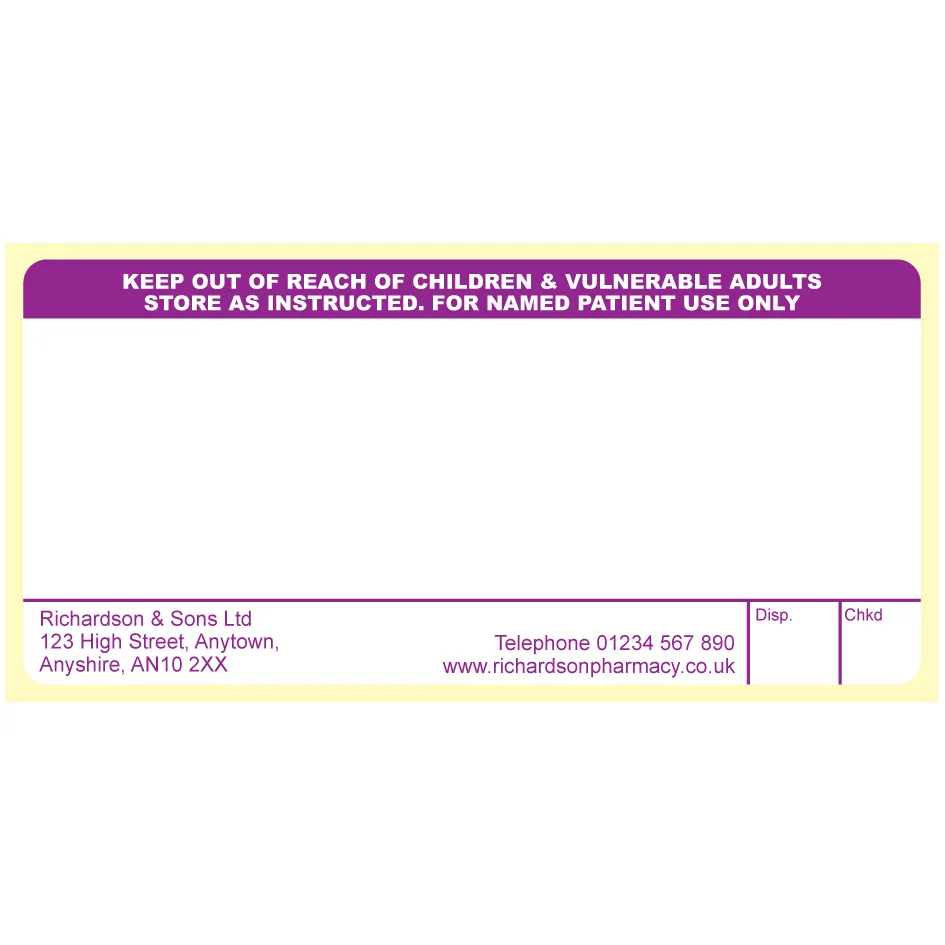
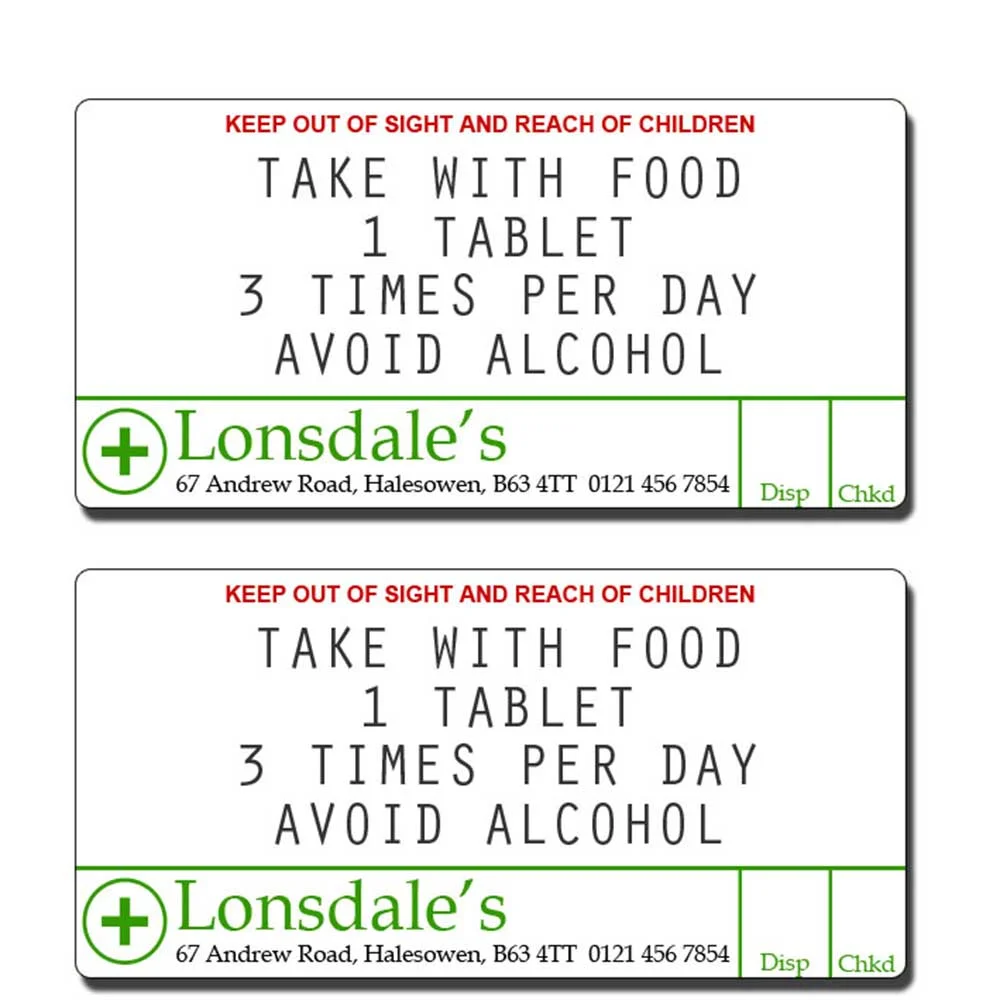
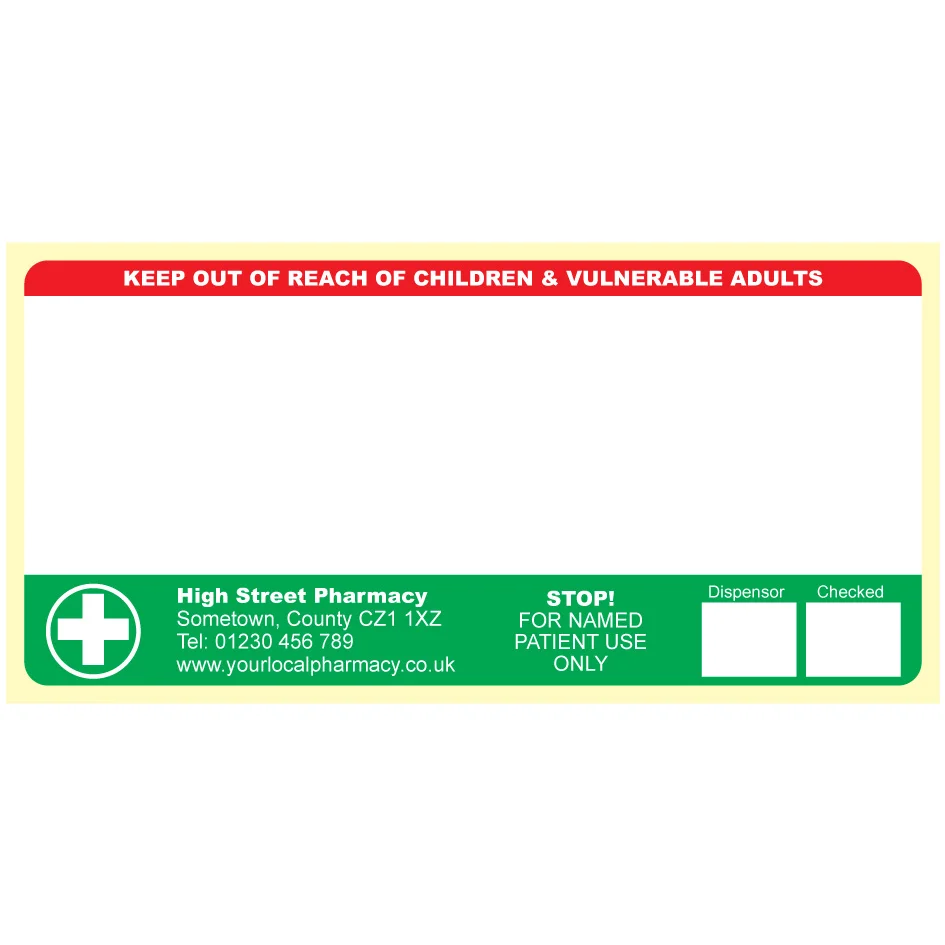
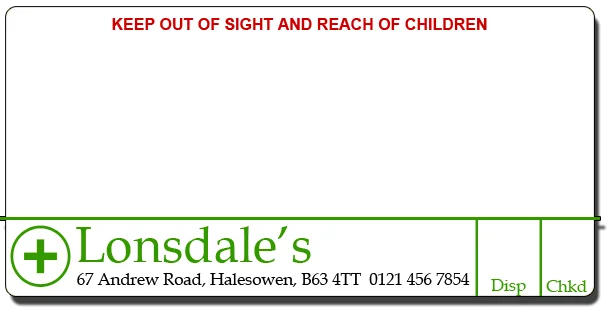
Pharmacy labels serve a critical function beyond simple identification. They’re the primary communication tool between pharmacy staff and patients, conveying dosage instructions, warnings, patient details, and essential safety information.
Mistakes aren’t academic concerns. Wrong dosages, missed warnings, or illegible instructions lead to adverse reactions, treatment failures, and patient harm. Clear, accurate pharmacy labels reduce these risks significantly.

I had an amazing experience working with Positive ID Labelling, especially Natalie. The labels were absolutely brilliant quality and exceeded my expectations. Natalie was fantastic throughout the whole process. Communication was amazing from start to finish. She was so helpful, guided me through everything, and made the whole experience stress free and enjoyable. She was also genuinely funny and a pleasure to work with, which made everything even better. I’ll definitely be working with Natalie again on future projects and would highly recommend Positive ID Labelling to anyone looking for high-quality labels and excellent customer service.

Fantastic label printing service. Labels to a very high specification. Helen was great at sorting out our requirements, quotes, and order.

We’ve had a great experience working with this supplier, especially with Natalie - she is always very responsive, professional, and friendly. The pricing is highly competitive and the sales service has been excellent from start to finish. If I could offer one suggestion, it would be to improve the account and invoice management process. It would be really helpful if there were a system for clients to easily track their past orders and invoices in one place. Overall, very pleased with the service and look forward to continuing our collaboration.

Absolutely brilliant service from start to finish. The team are brilliant and the product was excellent quality and exactly what I wanted. Natalie is amazing as are her colleagues. Will definitely be a returning customer. Thank you

What Information Belongs on Dispensing Labels
NHS dispensing standards and General Pharmaceutical Council guidance specify what must appear on prescription labels. Key elements include:
- Patient name clearly printed to prevent mix-ups
- Medication name and strength (generic and brand where applicable)
- Dosage instructions in plain language patients understand
- Quantity supplied and remaining repeats available
- Pharmacy details including name, address, and contact number
- Date dispensed for tracking and verification
- Warning labels for specific medications (drowsiness, avoid alcohol, etc.)
- Prescription number for reference and record-keeping
Some medications require additional warnings. “Keep out of reach of children,” “For external use only,” or “Complete the full course” might apply depending on the prescription.
Direct Thermal vs Thermal Transfer Labels
Pharmacy labels typically use one of two printing technologies, each with distinct advantages.
Direct thermal labels respond to heat from the printer head, creating text without ink or ribbons. They’re economical, fast, and perfect for short-term applications. Most prescription labels use direct thermal technology because prescriptions get consumed within weeks or months.
The trade-off? Direct thermal labels fade when exposed to prolonged heat, direct sunlight, or UV light. That’s rarely problematic for medications consumed quickly but matters if you’re labelling long-term storage or products with extended shelf lives.
Thermal transfer labels use a ribbon that transfers ink onto the label material under heat. They’re more durable, resist fading, and handle harsh conditions better. Hospital pharmacies doing bulk labelling or pharmaceutical manufacturers preparing stock containers often prefer thermal transfer for its longevity.
Label Sizes and Formats for Different Applications
Different pharmacy applications need different label dimensions. Standard prescription labels typically measure 70x36mm or 72x36mm, fitting neatly on most dispensing bottles and boxes.
Smaller labels work for vials, tubes, or compact packaging. Larger formats suit bulk containers or products needing extensive information. We supply pharmacy labels in any size specification required by your printers and workflow.
Perforated labels help when you need portions to remain with the product while another section goes to patient records. Some pharmacies use colour-coded labels to visually distinguish different types of prescriptions – Âprivate versus NHS, urgent versus routine, or to highlight specific warnings.
Adhesive Selection for Pharmaceutical Packaging
Not all adhesives suit every surface. Standard pharmacy labels use permanent adhesive that stays reliably attached to plastic bottles, cardboard boxes, and paper packaging throughout the medication’s journey from pharmacy to patient.
Some applications need removable or peelable adhesives. Temporary labelling for in-process stock, repackaging operations, or situations where labels must be cleanly removed without residue call for specialised adhesive formulations.
Refrigerated storage demands adhesives that maintain bond strength in cold conditions. Certain medications requiring cold chain storage need labels that don’t lift or peel when stored between 2-8 °C.
Printer Compatibility Matters
Pharmacy labels must work reliably with your existing equipment. We supply labels compatible with major pharmacy printer brands including Zebra, Citizen, OKI, Brother, and Dymo.
Core sizes vary between printer models. Some use 25mm cores, others 76mm. Label width, maximum roll diameter, and wound direction (inside versus outside wound) must match your equipment specifications. We clarify these details during order specification to prevent compatibility issues.
Bulk Supply and Inventory Management
High-volume pharmacies dispense hundreds of prescriptions daily. Running out of labels halts operations entirely. We supply pharmacy labels in bulk rolls, typically 1,000 labels per roll, packed in convenient box quantities.
Establishing reorder schedules helps maintain consistent supply without excessive inventory. Our 3-5 day turnaround means you can maintain lean stock levels knowing replenishment arrives rapidly.
Specialist Labels for Pharmacy Operations
Beyond standard prescription labels, pharmacies need various auxiliary labels:
Warning Labels communicate specific instructions or precautions – ”Avoid alcohol,” “May cause drowsiness,” “Do not crush,” etc. Colour coding (often red or orange) draws attention to critical warnings.
Fridge Storage Labels identify medications requiring refrigeration, preventing storage errors that might compromise medication efficacy.
Controlled Drug Labels help pharmacies track and manage controlled substances with appropriate documentation and security measures.
Batch Labels for dispensaries that prepare bulk quantities, showing preparation dates, expiry dates, and batch numbers for traceability.
“For External Use Only” and similar instruction labels prevent misuse of topical medications, eye drops, and other non-oral preparations.
Compliance with MHRA and GPhC Standards
The Medicines and Healthcare products Regulatory Agency (MHRA) and General Pharmaceutical Council (GPhC) set standards pharmacy labels must meet. Legibility, accuracy, and inclusion of mandatory information aren’t optional – Âthey’re regulatory requirements.
Labelling errors feature regularly in pharmacy inspections and can trigger enforcement actions. Investing in high-quality pharmacy labels with clear printing isn’t just good practice; it’s risk management that protects your registration and reputation.
Why Choose Positive ID Labels?
Speed matters when labels run out mid-shift. Our 3-5 day turnaround keeps your pharmacy running without lengthy waits or emergency courier expenses. Based in Derby, we’re centrally positioned to serve pharmacies throughout England, Scotland, and Wales efficiently.
Quality assurance ensures every roll meets specifications. Our direct thermal materials use premium face stocks with reliable adhesives that won’t fail at critical moments. Print quality remains crisp and scannable throughout the roll, preventing mid-roll quality degradation that plagues cheaper alternatives.
Expert support comes included. Unsure which label size suits your new printer? Need guidance on adhesive selection? Our team provides free technical advice to ensure you order exactly what your pharmacy needs.
Frequently Asked Questions
Can I print both patient names and medication details on the same label?
Yes, absolutely. Most pharmacy printers handle variable data printing, allowing each label to show unique patient names, medication details, dosage instructions, and prescription numbers. The label size needs sufficient space to display all required information legibly – Âwe can recommend appropriate dimensions for your content requirements.
What’s the shelf life of unused pharmacy labels?
Direct thermal labels typically maintain optimal print quality for 12-18 months when stored correctly. Keep them away from direct sunlight, heat sources, and high humidity. Thermal transfer labels have longer shelf life, often 2+ years. We recommend ordering quantities you’ll use within 6-12 months for best results.
Do your labels work with Electronic Prescription Service (EPS) systems?
Our pharmacy labels work with any printer compatible with EPS systems. Whether you’re using PMR software that generates labels via Zebra printers or other configurations, we supply labels matching your exact specifications. The key is ensuring label size, core size, and wound direction match your equipment.
Can I get custom warning labels with specific messages?
Yes. We can produce custom warning labels with your specific text, colours, and sizing requirements. Minimum quantities apply for bespoke printing, but for standardised warnings we offer pre-printed options in common sizes that work out more economical.
What happens if labels jam in my printer?
Label jams usually result from incorrect core size, wound direction, or label width mismatches. Occasionally, adhesive bleed (where adhesive appears on label edges) causes sticking. We specify labels precisely to your printer model to prevent these issues. If problems occur, we’ll troubleshoot and replace any faulty materials.
Keep your pharmacy running smoothly with reliable dispensing labels that meet NHS standards. Call 01332 864895 for a free quote or use the enquiry form to discuss your requirements. Free samples available for approved projects, with expert guidance on sizing, adhesives, and printer compatibility.
Related products and guides
- For deeper background, see our NHS barcode requirements.
- Sister product: our autoclave-compatible labels share the same production approach.
- Our chemist labels cover similar applications – worth a look if your project crosses into that area.
- Also relevant: healthcare labels.
I had an amazing experience working with Positive ID Labelling, especially Natalie. The labels were absolutely brilliant quality and exceeded my expectations. Natalie was fantastic throughout the whole process. Communication was amazing from start to finish. She was so helpful, guided me through everything, and made the whole experience stress free and enjoyable. She was also genuinely funny and a pleasure to work with, which made everything even better. I’ll definitely be working with Natalie again on future projects and would highly recommend Positive ID Labelling to anyone looking for high-quality labels and excellent customer service.
Fantastic label printing service. Labels to a very high specification. Helen was great at sorting out our requirements, quotes, and order.
We’ve had a great experience working with this supplier, especially with Natalie - she is always very responsive, professional, and friendly. The pricing is highly competitive and the sales service has been excellent from start to finish. If I could offer one suggestion, it would be to improve the account and invoice management process. It would be really helpful if there were a system for clients to easily track their past orders and invoices in one place. Overall, very pleased with the service and look forward to continuing our collaboration.
Absolutely brilliant service from start to finish. The team are brilliant and the product was excellent quality and exactly what I wanted. Natalie is amazing as are her colleagues. Will definitely be a returning customer. Thank you