
Dairy Labelling Regulations UK: Complete Guide for Dairy Producers
Dairy products are among the most tightly regulated food categories in the UK. From compositional standards that define what can legally be called butter, cheese, or cream, through to allergen declarations, date marking, and nutrition claims, dairy producers face a complex labelling landscape.
This guide covers everything UK dairy producers, processors, and retailers need to know about labelling dairy products correctly, including the protected dairy terms that cannot be used on non-dairy alternatives, PDO and PGI protections for regional cheeses and creams, and practical guidance on meeting all mandatory requirements.
Contents
- Mandatory Information on Dairy Product Labels
- Protected Dairy Terms: What You Can and Cannot Call Your Product
- Milk Labelling Requirements
- Cheese Labelling and Compositional Standards
- Butter and Spreadable Fats Labelling
- Cream Labelling: Types and Fat Content Standards
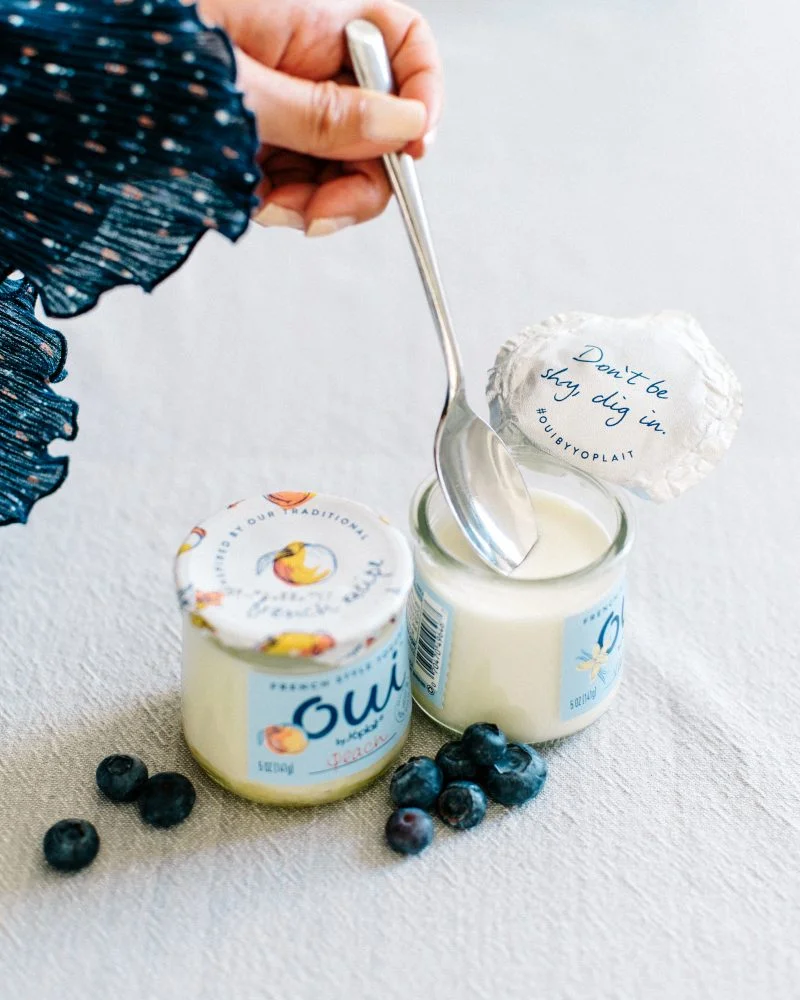
- Yoghurt Labelling Requirements
- Allergen Declarations: Milk as a Major Allergen
- Date Marking for Dairy Products
- Nutrition Declarations and Claims
- PDO and PGI Protected Dairy Products
- Organic Dairy Labelling
- Storage and Temperature Instructions
- Country of Origin Labelling for Dairy
- Plant-Based Alternatives: Naming Restrictions
- Common Dairy Labelling Mistakes
- Enforcement and Penalties
- Practical Compliance Checklist
- Need Dairy Labels? Talk to PID Labelling
Mandatory Information on Dairy Product Labels
All pre-packed dairy products sold in the UK must comply with the retained EU Regulation 1169/2011 (Food Information to Consumers, or FIC) and the Food Information Regulations 2014. This means every dairy product label must display:
For the full picture on general food labelling requirements, see our UK food labelling rules guide.
Protected Dairy Terms: What You Can and Cannot Call Your Product
One of the most important aspects of dairy labelling is the legal protection of dairy terminology. Under retained EU Regulation 1308/2013 (the Common Organisation of the Markets Regulation), certain terms are exclusively reserved for products derived from animal milk.
The following terms can only be used for dairy products made from milk:
This means a plant-based product cannot be labelled or marketed as “almond milk”, “vegan cheese”, or “oat cream” in the UK or EU. There are limited exceptions for products where the dairy term is used traditionally and the true nature is clear from context, such as coconut milk, peanut butter, cream crackers, or ice cream (see the plant-based alternatives section below).
These naming protections apply to manufacturers and marketers. Using a protected dairy term on a non-dairy product is a labelling offence that can result in enforcement action by Trading Standards.
Milk Labelling Requirements
Drinking milk in the UK is regulated by the Drinking Milk (England) Regulations 2008 and equivalent legislation in Scotland, Wales, and Northern Ireland. These regulations define the different types of drinking milk and set compositional standards.
Milk type designations
The following designations are legally defined and must be used accurately on labels:
Heat treatment declarations
The method of heat treatment must be declared on milk labels. Common designations include:
*Raw milk sold directly to consumers in England, Wales, and Northern Ireland must carry the warning: “This milk has not been heat-treated and may therefore contain organisms harmful to health.” Raw milk sales are prohibited in Scotland.
Cheese Labelling and Compositional Standards
The term “cheese” is legally protected under retained EU Regulation 1308/2013. A product can only be called cheese if it is derived exclusively from milk, produced through coagulation. Substances necessary for manufacture may be added, but they must not replace any milk constituent.
UK named variety cheese standards
Until December 2018, compositional standards for named UK cheese varieties were set in law under the Food Labelling Regulations 1996. When these legal provisions were revoked, the Provision Trade Federation (PTF) and Dairy UK published the Code of Practice on Compositional Standards for UK Named Variety Cheeses to maintain the same standards on a voluntary but widely observed basis.
This Code sets compositional requirements (minimum fat content as percentage of dry matter, maximum water content) and characteristics for named British cheese varieties including:
Using one of these names on a product that does not meet the compositional standards would be misleading and could result in enforcement action. The names of these varieties are treated as customary names under food labelling law.
Cheese labelling requirements
Beyond the general mandatory information, cheese labels should include:
- The type of milk used if it is anything other than cow’s milk (e.g. “goats’ milk cheese”, “sheep’s milk cheese”)
- Fat content – while not always legally mandatory on the label (it appears in the nutrition declaration), many cheeses carry front-of-pack fat content information. The Code of Practice specifies milk fat levels as a percentage of dry matter.
- Rind information – if the rind is not intended for consumption, this should be stated
- Pasteurised or unpasteurised milk – consumers increasingly expect this information, and it is required for some PDO cheeses
We produce labels for cheese manufacturers of all sizes, from artisan producers to industrial operations. See our cheese labels page for more information.
Butter and Spreadable Fats Labelling
Butter and other spreadable fats are regulated by the Spreadable Fats (Marketing Standards) and the Milk and Milk Products (Protection of Designations) (England) Regulations 2008, implementing retained EU standards.
Butter compositional standards
The term “butter” is a reserved description. To be called butter, a product must:
- Be derived exclusively from milk
- Contain a minimum of 80% milk fat and a maximum of 90%
- Contain a maximum of 2% non-fat milk solids
- Contain a maximum of 16% water
Reduced-fat butter designations
Products with lower fat content than standard butter have their own reserved descriptions:
- Three-quarter-fat butter – 60% to 62% milk fat
- Half-fat butter – 39% to 41% milk fat
- Dairy spread – other milk fat percentages (must specify the percentage)
Products that blend dairy fats with plant-based fats fall under separate “fats composed of plant and/or animal products” designations and cannot use the word “butter” in their name. This is why products like “Lurpak Spreadable” or similar use the term “spreadable” rather than “butter” when plant oils have been added. See our case study on butter labels.
Cream Labelling: Types and Fat Content Standards
Cream labelling in the UK follows the Code of Practice on Compositional Standards for Cream Designations in the UK, published by Dairy UK and the Provision Trade Federation. This Code replaced the legal standards that were previously in the Food Labelling Regulations 1996.
The term “cream” is legally defined as the part of milk rich in fat which has been separated by skimming or otherwise, intended for sale for human consumption. The milk can come from cows, goats, or sheep. Like other dairy terms, “cream” is protected and can only be used for products derived exclusively from milk.
UK cream designations and minimum fat content
Each cream designation has a minimum milk fat requirement that must be met:
- Clotted cream – minimum 55% milk fat (produced by scalding, cooling, and skimming milk or cream)
- Double cream – minimum 48% milk fat
- Whipping cream / Whipped cream – minimum 35% milk fat
- Sterilised cream – minimum 23% milk fat
- Cream / Single cream – minimum 18% milk fat
- Sterilised half cream – minimum 12% milk fat
- Half cream – minimum 12% milk fat
When calculating the percentage of milk fat, any added ingredients are disregarded. The only difference between “whipping cream” and “whipped cream” is that whipped cream has already been whipped.
Reduced-fat cream
Where cream has been modified to a lower fat content than the standard designation, the descriptors “reduced fat” and “half fat” can be used alongside the cream designation. Under the retained Nutrition and Health Claims Regulation (EC 1924/2006), a “reduced fat” claim can only be made where the fat reduction is at least 30% compared to a representative similar product.
Soured cream and creme fraiche
“Sour cream” or “soured cream” is defined as cream that has been fermented with harmless microorganisms or through acidification. Creme fraiche is a lightly soured cream with a typically higher fat content (around 48%). Both must be made from dairy cream to use these names.
Yoghurt Labelling Requirements
Unlike milk, cream, butter, and cheese, yoghurt does not have specific UK legislation governing its composition. Instead, the industry follows the Code of Practice for the Composition and Labelling of Yogurt, developed jointly by Dairy UK and the former LACOTS (now the National Trading Standards Board) and regularly revised since 1983.
What qualifies as yoghurt?
Under the Code of Practice, yoghurt is a fermented milk product made by the action of specific lactic acid bacteria (Lactobacillus delbrueckii subsp. bulgaricus and Streptococcus thermophilus) on milk. This definition matters because the term “yoghurt” is protected under dairy naming rules and can only be applied to genuine dairy fermented products.
Yoghurt labelling considerations
- Fat content descriptors – terms like “low fat yoghurt” and “fat free yoghurt” can be used where the product meets the requirements of the Nutrition and Health Claims Regulation. “Low fat” requires no more than 3g of fat per 100g; “fat free” requires no more than 0.5g per 100g.
- Live cultures – if claims are made about live cultures, these must be substantiated. A yoghurt described as containing “live cultures” must contain live bacteria at the point of consumption.
- Fruit content – where fruit is named in the product description, the QUID rules (Quantitative Ingredients Declaration) require the percentage of the named fruit to be declared in the ingredients list.
- Added sugars – increasingly a focus for consumers and regulators. The sugar content will appear in the nutrition declaration, and any claims about sugar content must comply with the Nutrition and Health Claims Regulation.
We supply labels to yoghurt manufacturers and dairy processors across the UK. See our yoghurt labels page for more information.
Allergen Declarations: Milk as a Major Allergen
Milk is one of the 14 major allergens that must be declared on food labels under UK food law. This is particularly significant for dairy producers because milk and its derivatives appear across a huge range of food products, often in forms that are not immediately obvious to consumers.
What counts as a milk allergen?
The allergen declaration requirement covers milk from all species (cow, goat, sheep, buffalo) and all products derived from milk, including:
- Casein and caseinates
- Whey and whey products
- Lactose
- Butter, butterfat, buttermilk
- Cream
- Cheese (including rennet)
- Yoghurt
- Milk powder (skimmed, whole, or modified)
- Lactalbumin and lactoglobulin
How to declare milk on labels
In the ingredients list, any ingredient derived from milk must be emphasised so it clearly stands out from the other ingredients. The most common approach is to use bold text, though underlining, capitalisation or a different font colour are also acceptable.
For single-ingredient dairy products (like plain milk or butter), where no ingredients list is provided, you must still include a separate allergen declaration such as: “Contains: milk“.
Cross-contamination with other allergens (e.g. nuts in a cheese with added ingredients) should be managed through precautionary allergen labelling (“may contain”) where a genuine risk exists after all practical steps to prevent cross-contact have been taken.
For comprehensive guidance on all 14 major allergens, see our allergen labelling guide. Businesses subject to Natasha’s Law requirements must also ensure prepacked for direct sale (PPDS) dairy products carry full allergen labelling.
Date Marking for Dairy Products
Correct date marking is critical for dairy products due to their perishable nature. Getting it wrong is not just a labelling offence – it can be a food safety issue.
Use by dates
Most fresh dairy products require a use by date because they are microbiologically perishable and could present a safety risk after a short period. Products that typically require a use by date include:
- Fresh milk (pasteurised)
- Fresh cream (single, double, whipping)
- Fresh yoghurt
- Soft and semi-soft cheeses
- Cottage cheese
- Cream cheese
- Fresh butter
Use by dates are a safety indicator. It is a criminal offence to sell food past its use by date. The date must be displayed in the format “Use by [day month]” or “Use by [day month year]”.
Best before dates
Longer-life dairy products that are not safety-critical after the stated date may carry a best before date instead. These include:
- Hard cheeses (Cheddar, Parmesan, etc.)
- UHT milk and cream
- Butter (when stored correctly)
- Dried milk products (milk powder, etc.)
- Sterilised milk and cream
Best before dates indicate quality rather than safety. Products can still be sold after their best before date (though not after their use by date).
Freezing and date marking
If a dairy product is suitable for freezing, the label should include guidance on freezing, ideally with a “freeze by” date. If the product has been frozen and thawed, this should be indicated, and the product must not be refrozen.
Nutrition Declarations and Claims
Mandatory nutrition declaration
Pre-packed dairy products must display a back-of-pack nutrition declaration showing energy (kJ and kcal), fat, saturates, carbohydrate, sugars, protein, and salt per 100g or 100ml. This can also be provided per portion if the portion size is defined.
There are limited exemptions from mandatory nutrition labelling. Single-ingredient foods (such as plain whole milk) sold without further processing may be exempt, but in practice most dairy products on retail shelves carry nutrition information. For full details see our nutrition declaration guide.
Nutrition and health claims on dairy products
Dairy products are often marketed with nutrition and health claims, but these must comply with the retained Nutrition and Health Claims Regulation (EC 1924/2006). All claims must be authorised and substantiated. Common claims on dairy products include:
| Claim | Comments |
|---|---|
| Source of calcium | Can only be used if the product contains at least 15% of the nutrient reference value (NRV) for calcium per 100g (i.e. at least 120mg calcium per 100g) |
| High calcium / Rich in calcium | Requires at least 30% of the NRV per 100g (i.e. at least 240mg per 100g) |
| Source of protein | Requires at least 12% of the energy value of the food to come from protein |
| High in protein | Requires at least 20% of the energy value to come from protein |
| Low fat | No more than 3g of fat per 100g (or 1.5g per 100ml for liquids) |
| Fat free | No more than 0.5g of fat per 100g or 100ml |
| Reduced fat | at least 30% less fat than a comparable standard product |
| Low sugar / No added sugar | Must meet the specific conditions in the Regulation |
Health claims linking specific nutrients to health benefits (e.g. “Calcium is needed for the maintenance of normal bones”) must use the exact approved wording from the EU Register of authorised health claims. You cannot create your own health claim wording or imply benefits that have not been authorised.
PDO and PGI Protected Dairy Products
Several UK dairy products have Protected Designation of Origin (PDO) or Protected Geographical Indication (PGI) status, giving them legal protection against imitation. Post-Brexit, the UK maintains its own geographical indications (GI) scheme, and products that had protected status under EU law before 2021 retained their protection under UK law.
UK dairy products with protected status
Notable protected UK dairy products include:
- Stilton Blue Cheese (PDO) – can only be produced in the counties of Derbyshire, Leicestershire, and Nottinghamshire, using pasteurised local milk and following defined production methods
- West Country Farmhouse Cheddar (PDO) – must be made on a farm in the West Country (Cornwall, Devon, Dorset, or Somerset) using local milk and traditional methods, including hand cheddaring
- Cornish Clotted Cream (PDO) – must be produced in Cornwall using Cornish milk and the traditional scalding method
- Yorkshire Wensleydale (PGI) – produced in Wensleydale, North Yorkshire
- Beacon Fell Traditional Lancashire (PDO) – made in Lancashire using a specific two-day curd method
- Bonchester Cheese (PDO) – a Scottish soft cheese
- Staffordshire Cheese (PDO) – produced on designated farms in Staffordshire
- Swaledale Cheese (PDO) and Swaledale Ewes’ Cheese (PDO) – from the Swaledale area of North Yorkshire
- Teviotdale Cheese (PDO) – from the Scottish Borders
- Single Gloucester (PDO) – from Gloucestershire
Labelling requirements for PDO/PGI dairy products
Products with protected status must carry the appropriate UK GI logo on their packaging. Only producers who meet the full production specification for the designation may use the protected name. Using a protected name on a product that does not meet the specification is an offence, even if the label indicates the true origin of the product (e.g. labelling a cheese “Stilton-style” is not permitted if it does not meet the PDO specification).
Organic Dairy Labelling
To label a dairy product as “organic” in the UK, the product must be certified by a Defra-approved organic control body, such as the Soil Association, OF&G, or others. The labelling requirements include:
- The word “organic” can only be used if the product is certified. Using it without certification is a criminal offence.
- The organic control body code number must appear on the label (e.g. “GB-ORG-05” for the Soil Association).
- The organic logo – in the UK, organic products may display the UK organic logo and/or the EU organic leaf logo (the EU logo is mandatory for products placed on the NI market under the Northern Ireland Protocol).
- Ingredient composition – a product labelled as organic must contain at least 95% organic agricultural ingredients.
- Origin of agricultural ingredients – the label must indicate where the agricultural raw materials were farmed (e.g. “UK Agriculture”, “EU Agriculture”, or “Non-EU Agriculture”).
Organic dairy production standards cover animal welfare, feeding practices, veterinary treatments, and environmental management, all of which are verified through annual inspections. Products making organic claims without proper certification face enforcement action from Trading Standards and the relevant organic control body.
Storage and Temperature Instructions
Storage instructions are particularly important for dairy products because of their perishable nature and the link between storage temperature and food safety. Labels must include:
- Storage temperature – most fresh dairy products require refrigeration. The typical instruction is “Keep refrigerated” or a specific temperature range such as “Store between 1-5 degrees Celsius”.
- “Once opened” instructions – e.g. “Once opened, consume within 3 days and keep refrigerated.” This is important for products like milk, cream, and yoghurt where the shelf life changes significantly after opening.
- Pre-opening storage – for UHT or ambient products, state the storage conditions before opening (e.g. “Store in a cool, dry place”) and then the post-opening conditions (e.g. “Once opened, refrigerate and use within 3 days”).
For pasteurised milk specifically, the temperature at which the product should be stored must be stated on the label. The cold chain is critical: failure to maintain correct temperatures during storage and transport can lead to premature spoilage and potential safety risks.
Country of Origin Labelling for Dairy
Country of origin labelling for dairy products has been an evolving area of UK regulation, particularly following Brexit and ongoing government consultations on fairer food labelling.
Current requirements
Under current UK law, there is no blanket mandatory requirement to declare the country of origin on all dairy products. However, origin labelling is required where:
- The product has a PDO or PGI designation that implies a specific origin
- Omitting the origin would mislead the consumer – for example, if the packaging uses imagery or flags suggesting a specific country that is not where the product was actually produced
- The country of origin of the primary ingredient differs from the stated origin of the food itself (under the retained primary ingredient origin rules)
Potential future changes
The UK Government has been consulting on enhanced country of origin and method of production labelling, with dairy specifically mentioned as a category to be kept under review. The 2024 Defra consultation on fairer food labelling received broad support for mandatory origin labelling, though no new legislation has yet been enacted. Dairy producers should be prepared for potential mandatory origin labelling requirements in the future.
Northern Ireland: “Not for EU” labelling
Under the Windsor Framework and the Northern Ireland Retail Movement Scheme (NIRMS), certain dairy products moving from Great Britain to Northern Ireland via the green lane must carry “Not for EU” labelling. Dairy products have been subject to this requirement since Phase 1 (October 2023). This is primarily a concern for producers and retailers supplying the Northern Ireland market.
Plant-Based Alternatives: Naming Restrictions
The growth of plant-based alternatives to dairy products has raised significant labelling questions. The key rule is clear: protected dairy terms cannot be used for non-dairy products.
This means:
- A soy-based product cannot be called “soy milk” – it must use terms like “soy drink” or “soy-based alternative”
- An oat-based product cannot be called “oat cream” or “oat yoghurt”
- A plant-based product cannot be called “vegan cheese” or “dairy-free butter”
There are traditional exceptions where dairy terms are permitted for non-dairy products because the usage is well established and consumers understand the true nature of the product. The UK list of exceptions includes terms such as coconut milk, peanut butter, cocoa butter, cream crackers, cream soda, salad cream, ice cream, and cream of tartar, among others.
This matters for dairy producers because it protects the integrity of dairy terminology and ensures consumers can trust that a product labelled as “milk”, “cheese”, “cream”, “butter”, or “yoghurt” is genuinely made from animal milk.
Common Dairy Labelling Mistakes
Based on our experience working with dairy producers, these are the most common labelling errors we encounter:
- Using a reserved cheese name on a product that does not meet the compositional standard – for example, calling a product “Cheddar” when it does not meet the requirements set out in the Code of Practice
- Failing to emphasise milk as an allergen – even in products where milk is obviously the main ingredient, the allergen must be emphasised in the ingredients list or declared separately
- Incorrect date marking – using a best before date on a perishable product that should carry a use by date. This is a food safety issue, not just a labelling technicality
- Unauthorised nutrition or health claims – making claims about calcium, protein, or other nutrients without meeting the specific conditions in the Regulation, or using unapproved health claim wording
- Missing “once opened” instructions – particularly important for products like UHT milk or cream where the shelf life changes dramatically after opening
- Unclear fat content on cream products – using a cream designation without the product meeting the minimum fat content requirement
- Using “organic” without certification – a criminal offence that carries serious penalties
- Missing or inadequate storage instructions – particularly the storage temperature, which is mandatory for pasteurised milk
Enforcement and Penalties
Dairy product labelling is enforced by Trading Standards officers within local authorities, with the Food Standards Agency (FSA) providing overarching regulatory guidance. Non-compliance can result in:
- Improvement notices – requiring labelling corrections within a specified period
- Product withdrawal or recall – particularly for allergen failures or incorrect date marking on perishable products
- Prosecution – falsely describing food is a criminal offence. Serious or repeated breaches can result in significant fines
- Seizure and destruction – products that are unsafe or unfit for consumption due to labelling failures can be seized
Allergen labelling failures on dairy products have been responsible for serious food safety incidents and product recalls. Given that milk is one of the most common allergens, getting this right is essential for consumer safety and your business reputation.
Practical Compliance Checklist
Use this checklist when reviewing your dairy product labels:
Legal requirements (mandatory)
- Product name uses the correct legal or customary name (respecting reserved descriptions)
- Ingredients list in descending weight order with allergens emphasised
- Milk declared and emphasised as an allergen
- Net quantity displayed correctly (g, kg, ml, or litres)
- Correct date marking (use by for perishable, best before for long-life)
- Storage conditions including temperature
- “Once opened” instructions where applicable
- Nutrition declaration per 100g or 100ml
- Name and address of responsible UK food business operator
- Lot or batch number
- Country of origin where required
Compositional standards
- Product meets the compositional requirements for its designated name (e.g. minimum fat content for cream type, cheese variety standards)
- Any PDO/PGI products carry the correct logo and meet the full production specification
- Organic products are certified and display the control body code number
Claims and additional information
- Any nutrition claims meet the specific conditions (e.g. “low fat”, “source of calcium”)
- Any health claims use the exact authorised wording
- No misleading imagery, flags, or descriptions suggesting a false origin
- Freezing guidance where appropriate
Need Dairy Labels? Talk to PID Labelling
At PID Labelling, we produce labels for dairy manufacturers and processors across the UK. From dairy labels and cheese labels to yoghurt labels, we combine print quality with practical knowledge of dairy labelling requirements.
Our labels are designed to withstand the challenges of dairy environments – refrigerated storage, condensation, and wet handling. Whether you need labels for retail packs, wholesale catering products, or farm-gate sales, we offer fast turnaround and competitive pricing from our Derby facility.
We also offer Labeldata and Nutridata software systems that can help you manage your product labelling data, allergen declarations, and nutrition calculations accurately across your entire product range.
Call us on 01332 864895 to discuss your dairy labelling requirements, or fill in the contact form below for a quote.

I had an amazing experience working with Positive ID Labelling, especially Natalie. The labels were absolutely brilliant quality and exceeded my expectations. Natalie was fantastic throughout the whole process. Communication was amazing from start to finish. She was so helpful, guided me through everything, and made the whole experience stress free and enjoyable. She was also genuinely funny and a pleasure to work with, which made everything even better. I’ll definitely be working with Natalie again on future projects and would highly recommend Positive ID Labelling to anyone looking for high-quality labels and excellent customer service.

Fantastic label printing service. Labels to a very high specification. Helen was great at sorting out our requirements, quotes, and order.

We’ve had a great experience working with this supplier, especially with Natalie - she is always very responsive, professional, and friendly. The pricing is highly competitive and the sales service has been excellent from start to finish.If I could offer one suggestion, it would be to improve the account and invoice management process. It would be really helpful if there were a system for clients to easily track their past orders and invoices in one place.Overall, very pleased with the service and look forward to continuing our collaboration.

I inadvertently ordered the incorrect label guns which was quickly sorted by Natalie. She was excellent, customer service at its best! Thank you once again

All food labelling guides are provided in good faith for information purposes only and do not constitute legal advice. For specific compliance questions about specific labelling laws, contact a specialist or contact your local Trading Standards authority. Read our Regulatory Information Disclaimer