What Is Tamper-Evident Labelling – And When Should You Use It?
Tamper-evident labelling is a widespread type of labelling. A customer picks up a package of vitamins; they check the tamper-evident security label. A parcel arrives; the recipient verifies the shipping label hasn’t been opened. Tamper-evident labelling serves one critical function: it shows consumers that a product hasn’t been opened, altered, or interfered with.
For some products, tamper-evident labelling is legally required. For others, tamper-evident labelling is a trust signal justifying premium pricing. For all, it’s customer protection.
What Is Tamper-Evident Labelling?
Tamper-evident labels are designed to be destroyed or visibly altered if someone attempts to remove it or open the package. Types of tamper-evident labelling include:
- Destructible material: Tears apart or shreds when removal is attempted. Pieces remain on both the package and the attempted remover’s hand.
- Ultra-destructible material: Fragments into tiny checkboard-pattern pieces. Cannot be reassembled or reapplied.
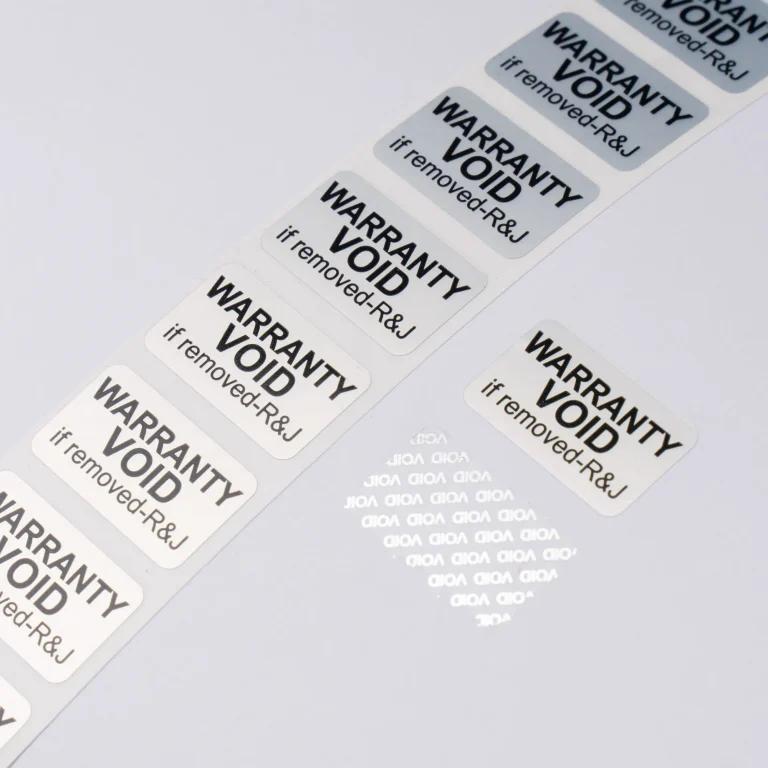
- Voidable material: Displays ‘VOID’ text when removed. Invisible when intact; becomes visible only with removal.
- Permanent adhesive: So strong that removal leaves obvious adhesive residue and often damages the package surface underneath.
The goal is identical across all types: removing or opening the label provides instant, visible proof of tampering.
Tamper-Evident Labelling: When To Use It
Legal Requirements
- Pharmaceutical products: Any over-the-counter medication requires tamper-evident seals by law.
- Cosmetics and personal care: Many countries require tamper-evident labelling in their cosmetic labels.
- Food products: Increasingly standard for packaged foods, infant formula, and products with known tampering risks.
- Chemical and hazardous products: Often required to prevent misuse or unauthorised access.
If you’re in these categories, tamper-evident labels are not optional.
Risk-Based Requirements
Beyond legal mandates, tamper-evident labelling is appropriate for:
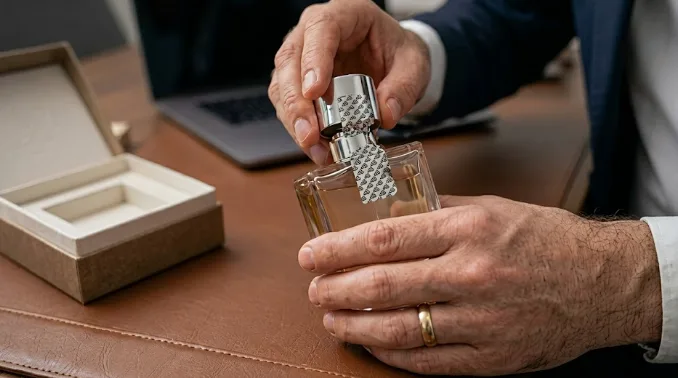
- High-value products: Luxury goods, premium spirits, designer cosmetics, where theft or counterfeiting is a risk.
- Safety-critical products: Any product where opening affects safety (food labels, baby products, healthcare items).
- Uncontrolled retail environments: Products sitting on shelves where anyone could access them.
- Warranty protection: You offer refunds or replacements, and tamper-evident labels prove the customer opened the product.
- Direct-to-consumer delivery: Products arriving to homes or offices without secure handling.
Types Of Tamper-Evident Labels And Material Options
Destructible Labels
Paper or other man-made substrates engineered to tear and shred when removal is attempted. Obvious evidence of tampering.
Advantage: Visible proof. Disadvantage: Label is destroyed; printed information (warranty number, batch code) is lost.
Ultra-Destructible Labels
Film fragments into tiny pieces when removal is attempted. Pieces remain on the package; reassembly is impossible – the material effectively falls apart when tampered with.
Advantage: Prevents reapplication. Checkboard pattern visible on the package. Disadvantage: Label destroyed; information lost.
Voidable Labels
Text ‘VOID’ appears on both label and package surface when removal is attempted.
Advantage: Label might survive removal so information can be read; ‘VOID’ appearance is irrefutable proof. Disadvantage: Skilled users can sometimes carefully remove labels.
High-Tack Permanent Adhesive
Extremely strong adhesive. Removal inevitably leaves residue and often damages the surface underneath.
Advantage: Works on any material. No special manufacturing needed. Disadvantage: Package damage, while obvious, isn’t as clear a signal as a destroyed label or ‘VOID’ appearance.
Choosing The Right Tamper-Evident Specification
- For pharmaceutical and food products: Destructible or ultra-destructible material. Consumers expect obvious destruction.
- For high-value/theft-prone products: Ultra-destructible or void labels. Prevents reuse or relabelling.
- For warranty protection: Voidable labels or high-tack adhesive. Proves the customer opened the product.
- For cosmetics and beauty: Voidable labels (professional look) or holographic security labels (aesthetic + security).
Cost Considerations
Tamper-evident labels cost more than standard labels:
Destructible material: 10-20% premium – Ultra-destructible material: 20-40% premium – Voidable labels: 15-30% premium – Holographic security labels: 40-100% premium
For products where tampering is a genuine risk, the cost is small compared to dealing with returned, damaged, or counterfeited products. The label is insurance against shrinkage and fraud.
Common Tamper-Evident Label Mistakes
- Not explaining the seal. Customers don’t know what ‘VOID’ means or why the label is designed to destruct. Brief guidance: “Check that this seal is intact. If it shows ‘VOID,’ the product has been opened.”
- Using the wrong material for the risk. Destructible labels can be carefully peeled if someone is patient. Ultra-destructible (which cannot be reassembled) is necessary if reapplication is a concern.
- Applying labels carelessly. If not fully adhered, the tamper-evident feature may not activate. Proper application matters.
- Using tamper-evident labels inconsistently. Some products have seals; identical products don’t. Customers get confused.
FAQ: Tamper-Evident Label Questions Answered
Q: Are tamper-evident labels visible from outside the box? A: Usually yes — typically placed on the outside so consumers see them immediately.
Q: Can tamper-evident labels be removed and reapplied? A: Destructible and ultra-destructible labels cannot. Voidable labels can be carefully removed (leaving ‘VOID’ visible) but reapplication looks suspicious. High-tack labels are difficult to remove without leaving residue.
Q: Do tamper-evident labels work on curved bottles? A: Yes, but the application is more challenging. The label must make full contact. Confirm your specification works on your package shape. Talk to us for more advice: call 01332 864895
Q: Can I print variable data (batch codes, dates) on tamper-evident labels? A: Yes, on most materials. But ensure printed information doesn’t interfere with the tamper-evident feature. We will work with you to ensure your variable data labels meet your needs.
Q: What if a consumer reports damage they didn’t cause? A: Damaged seals can happen from rough handling or temperature changes. Document what normal damage looks like vs intentional tampering so you can assess claims fairly. You may need to recall your product to re-verify and you can reseal with another tamper-evident label.
Q: Are tamper-evident labels required for all products? A: No. They’re legally required for certain categories (pharmaceuticals, some cosmetics) and appropriate for high-value or safety-critical products. Not all products need them.
Q: Can counterfeiters defeat tamper-evident labels? A: Ultra-destructible and destructible materials are very difficult to defeat. Voidable labels are theoretically defeatable by experts. For premium anti-counterfeiting, combine tamper-evident labels with holograms and other security features.
Tamper-Evident Labels: Protection And Trust
For some products, tamper-evident labels are non-negotiable legally. For others, they’re a trust signal that justifies premium pricing and reduces fraud.
The cost is modest compared to the value: fewer returned damaged products, reduced shrinkage, customer confidence, and regulatory compliance.
At Positive ID Labels, we supply all types of tamper-evident labels — destructible, ultra-destructible, voidable, and security holograms. We advise on which type matches your risk profile and ensure labels are correctly applied.
Need tamper-evident labels designed and printed, or unsure which type you need? Call us on 01332 864895. We’ll discuss your product, assess tampering risks, and recommend the right tamper-evident specification. Or fill out our contact form and we’ll call you back.
Tamper-evident labels protect your customers and your business.